SPACEX IPO MIGHT BE A WAKE UP CALL FOR EU SPACE SECTOR
The offering could pour $75B into the company and prove the formula for space success: public money plus private risk.
by editor4 min readcomments soon
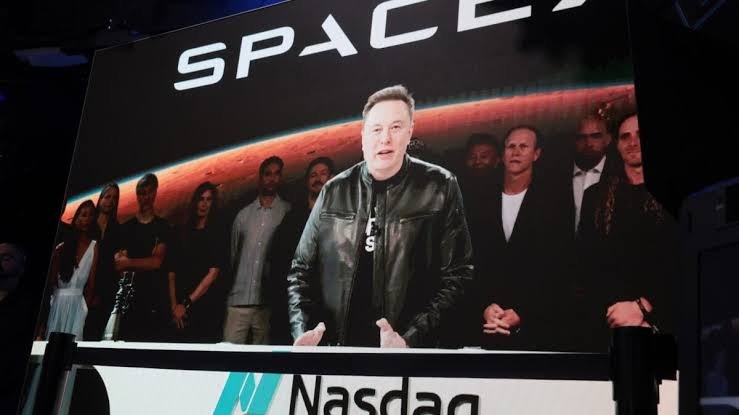
All eyes are on New York today for SpaceX’s IPO, a float that could hand the company roughly $75 billion in fresh capital. For the European space sector, the event is less about stock performance and more about what it signals: a second chance to build a space economy that can compete.
The European Space Policy Institute researchers put it bluntly. The IPO offers Europe a unique learning opportunity. It is a chance to observe a company that scaled on a mix of massive public contracts and private risk, a formula Europe has mostly talked about but rarely executed with the same ambition.
WHAT EUROPE CAN LEARN
SpaceX’s success did not come from public funding alone or from pure venture capital. It came from layering public capital and public contracts, with the willingness to pour everything back into the next thing. The IPO signals that in the next phase of the digital economy, the winners may be the ones who control multiple layers of the stack: launch, satellite connectivity, chips, AI, cloud platforms, and applications.
The region has strong public institutions, increasing defense budgets, and a clear sovereignty push. But growing the sector requires more than public capital. It needs companies with larger ambitions and a willingness to swing for the fences, to expand beyond a single business line. The IPO should give European executives the confidence to do that.
The analysis here is not that Europe should copy SpaceX.
It cannot: the geopolitical context, the procurement rules, the investor base are all different. What it can copy is the attitude. European startups need to think bigger, raise more, and take longer-term bets. The growth-stage financing gap abroad continues to drive space industry scale-ups for growth capital. That has to change.
EUROPE UNIQUE STRENGHT
European fragmentation is usually framed as a weakness, but in space it can be an advantage. Multiple national space hubs breed resilience, and wealth is distributed through pan-European consortiums. The European Launcher Challenge is already creating a pipeline of companies that can expect future contracts from ESA and national governments. In May, the European Commission proposed new rules to allocate two-thirds of local communications spectrum to European satellite operators, a clear sign the sovereignty push is not going anywhere.
That push may accelerate if governments begin to see the US as an unreliable partner. The perception that diversification is prudent is already creeping into defense and space circles across the continent.
But fragmentation also means there is no single European SpaceX. The capital is more dispersed, the risk appetite is smaller, and the exit timeline is compressed. The IPO should temper VC expectations about what space startups require to succeed. VCs realize it takes more than ten years to exit. That is a hard lesson for a sector used to software timelines, but the data is unambiguous: space is a long game.
THE SIGNALS FROM THE MARKET
Even before the IPO, the European space market was moving. ICEYE announced a €450 million Series F at a €10 billion valuation, a clear sign that Earth observation is a proven commercial model. Reflex Aerospace selected Spanish startup Arkadia Space to provide a propulsion system for a satellite mission launching in 2027, showing the kind of cross-border supply chain Europe needs. Tilebox announced an update to make AI agents more effective geospatial-data analysts, addressing the persistent complaint that AI is supposed to make EO data more accessible but still feels like a black box.
Individually, these are small moves. Together, they point to a maturing ecosystem that understands the fundamentals: build for government and commercial customers, raise strategically, and keep the stack vertical.
WHAT COMES NEXT
The real test for Europe is whether the IPO changes anything in practice. The policy framework is largely in place: more defense spending, sovereign spectrum allocation, procurement guarantees for launcher challenge winners. What is missing is the cultural shift. European space leaders have to stop thinking like contractors and start thinking like platform builders.
Analysts are split over the stock price and short-term performance of the SpaceX offering, but they agree the space industry is booming. For Europe, the timing is good. The second chance is real, but it is not a gift. It requires companies with larger ambitions, investors willing to wait, and a political environment that rewards risk. If the IPO does nothing else, it should make that clear.
what did you make of it?
more from space
space
SPACEX ABORTS STARTSHIP FLIGTH 13 AFTER ENGINES FAIL TO IGNITE
An automatic abort kicked in when some Raptor engines on the Super Heavy booster didn't light; two engines will be replaced before the next try.
space
FFC APPROVES SPACE MIRROR: REAL ISSUE IS THE OTHER MILLION SATELLITES
Reflect Orbital gets a license to test sunlight reflection, while SpaceX files for 40 times as many satellites as have ever been launched.
space
ISPACE BUYS 500KG OF PAYLOAD SPACE ON LUNAR LANDER STARSHIP
The Japanese firm will develop a rover to deliver customer payloads up to a few kilometers across the lunar surface, targeting a 2030 launch.
space
ASTRONOMERS SAY 1.7MN SATELLITES WOULD DESTROY GROUND BASED ASTRONOMY
A new ESO study calculates that proposed megaconstellations would make large telescope images unusable for hours each night.