FFC APPROVES SPACE MIRROR: REAL ISSUE IS THE OTHER MILLION SATELLITES
Reflect Orbital gets a license to test sunlight reflection, while SpaceX files for 40 times as many satellites as have ever been launched.
by editor4 min readcomments soon
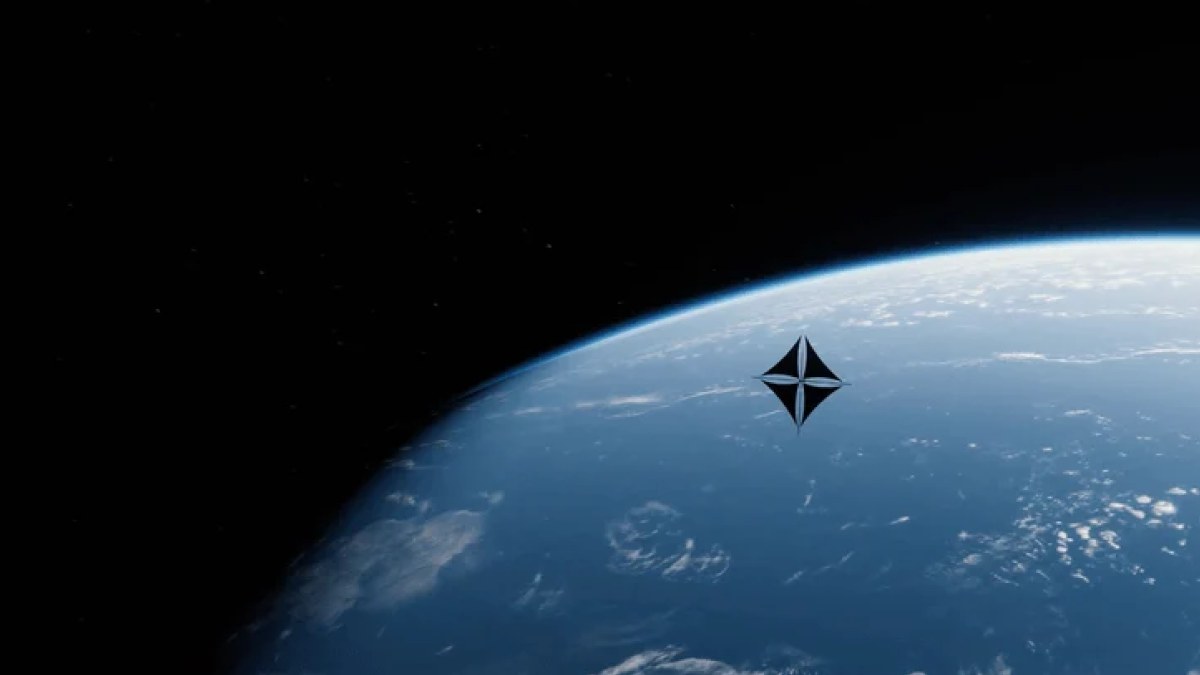
The Federal Communications Commission gave Reflect Orbital the green light to test a satellite that will reflect sunlight to Earth at night, and the agency's reasoning was this: the design uses radiofrequency spectrum, so the FCC has jurisdiction. According to the commission, everything else is someone else's responsibility.
The satellite is called Earendil-1. It will carry a mirror that covers an area about five kilometres wide, and it must repoint every four minutes to keep the beam steady. Reflect Orbital calls the concept "sunlight on demand" and imagines selling it to solar farms that want to keep generating after dark. The company plans to have more than 50,000 such satellites in orbit by 2035.

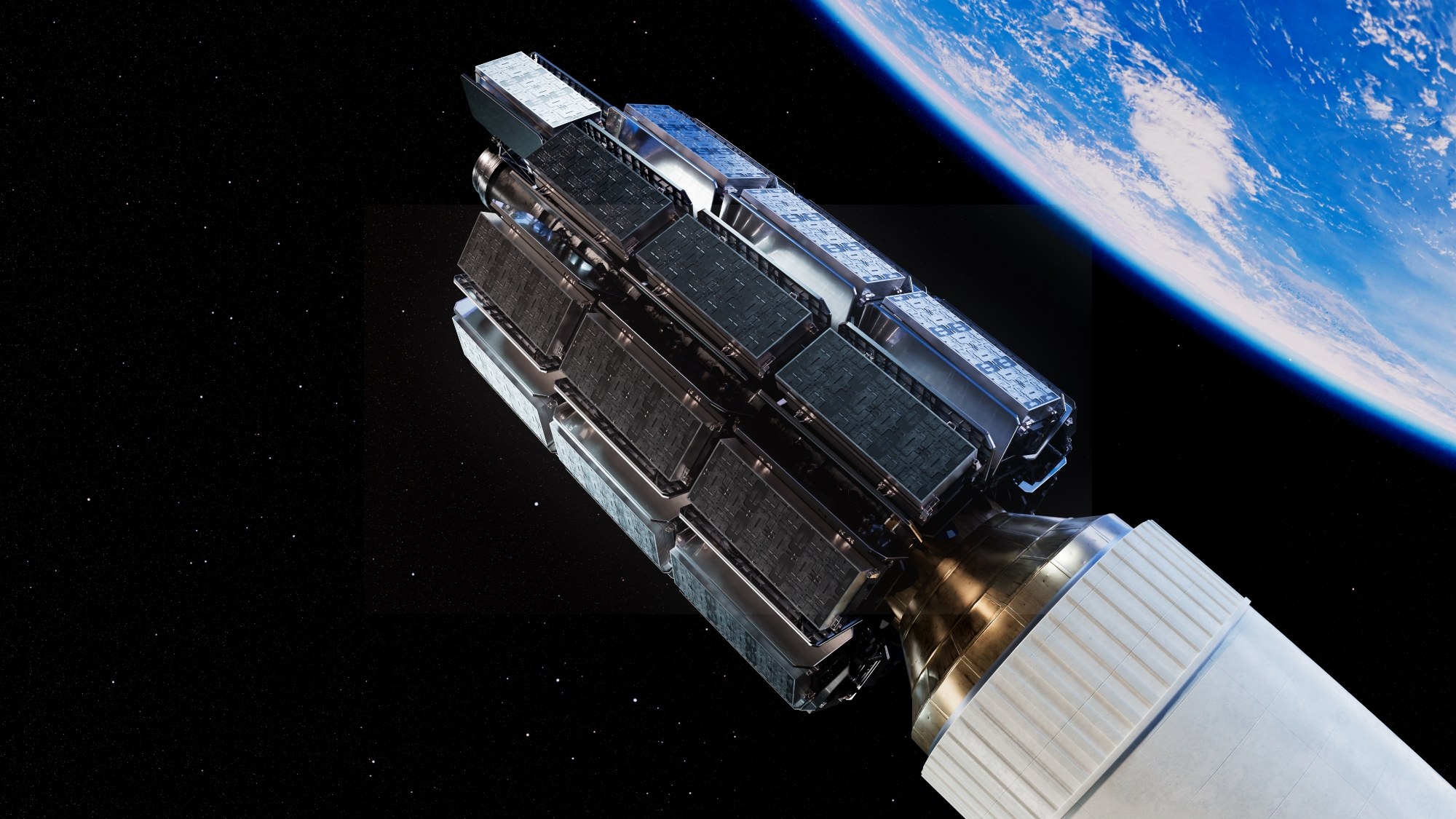
One problem. There are already close to 11,000 SpaceX Starlink satellites up there, and that is the part of the story where the numbers leave the realm of engineering and enter the realm of absurdity.
THE EXPLOSION
In February, SpaceX filed with the FCC for permission to operate one million additional satellites to provide bandwidth for AI centres. A million satellites. That is roughly 40 times as many artificial objects as have been launched throughout all of human history. Then SpaceX proposed another 100,000 satellites to interface with that fleet. Four rival companies filed copycat proposals for tens of thousands of satellites each.
The FCC gave scientists worldwide just 30 days to model the effects of adding a million birds to the orbital environment. A near-miss between a Starlink satellite and a Chinese spacecraft had already occurred in December 2025. The margin for error shrinks with every new constellation.
THE MASSIVE REGULATORY GAP
The FCC was created to regulate radio broadcasts on Earth. It now finds itself the de facto gatekeeper for orbital real estate, a job it was neither designed for nor funded to handle. When asked about the environmental risks of Reflect Orbital's mirror, the commission stated that the "risks of harm raised on the record regarding Reflect Orbital's solar reflector are unrelated to the Commission's authorising of radiofrequency spectrum." This is a convenient parsing. The mirror itself does not use radio waves. The satellite that carries it does, and that is the hook the FCC uses to claim authority over the whole payload.
Recent budget cuts make it infeasible to move evaluation of satellite proposals to the U.S. Office of Space Commerce, the agency that actually has a mandate for orbital traffic management. So the FCC stays in the chair, processing filings that have nothing to do with spectrum and everything to do with the physical occupation of low Earth orbit.
THE TREATY BARELY ANYONE ACKNOWLEDGES
The 1967 Outer Space Treaty, signed by more than 100 countries including the United States and Russia, states that "outer space is not subject to national appropriation by claim of sovereignty, by means of use or occupation." The treaty was written for a world where nations claimed territory on the Moon. It never contemplated a single private company deciding to fill low Earth orbit with enough metal to reflect sunlight across entire counties.
The Kessler Syndrome is no longer a theoretical footnote. It is a math problem with a growing denominator. A cascade of collisions that destroys swathes of satellites, cripples GPS and communications, and leaves orbital debris fields that last generations. The more satellites that go up, the closer the math gets to tipping.
WHAT COULD GO WRONG
Reflect Orbital's mirror is relatively benign: it just bounces sunlight. But the broader trend includes proposals to send solar power down to Earth through high-energy beams. That approach could change atmospheric chemistry and kill wildlife. The technology is speculative, but the regulatory pathway is already being established by the same FCC that says environmental risks are not its business.
Satellites orbit the Earth once every 90 minutes. Every new constellation is a new set of intersections with every other constellation. The FCC, as it made clear, only considers spectrum use. Collisions, light pollution, and interference are not its concern.
ONE SMALL STEP...
The Reflect Orbital test is a small step. One satellite, a few minutes of reflected light, a novelty. But the test normalises the concept, and the FCC's narrow framing sets a precedent. If a mirror is a spectrum device, then a beam is a spectrum device, and a constellation of mirrors is a spectrum device, and the agency that can barely keep up with its docket will not slow down for atmospheric chemistry or collision risk.


The 30-day review window was a farce. The treaty that says space belongs to no one will be tested by the companies that treat it as though it belongs to everyone.
what did you make of it?
more from space
space
SPACEX ABORTS STARTSHIP FLIGTH 13 AFTER ENGINES FAIL TO IGNITE
An automatic abort kicked in when some Raptor engines on the Super Heavy booster didn't light; two engines will be replaced before the next try.
space
ISPACE BUYS 500KG OF PAYLOAD SPACE ON LUNAR LANDER STARSHIP
The Japanese firm will develop a rover to deliver customer payloads up to a few kilometers across the lunar surface, targeting a 2030 launch.
space
ASTRONOMERS SAY 1.7MN SATELLITES WOULD DESTROY GROUND BASED ASTRONOMY
A new ESO study calculates that proposed megaconstellations would make large telescope images unusable for hours each night.
space
JWST SPIES A WARM HAZY JUPITER ORBITING A DEAD STAR
Astronomers have measured the atmosphere of a planet orbiting a white dwarf for the first time, and it is surprisingly warm and full of methane.