ASTRONOMERS SAY 1.7MN SATELLITES WOULD DESTROY GROUND BASED ASTRONOMY
A new ESO study calculates that proposed megaconstellations would make large telescope images unusable for hours each night.
by editor6 min readcomments soon
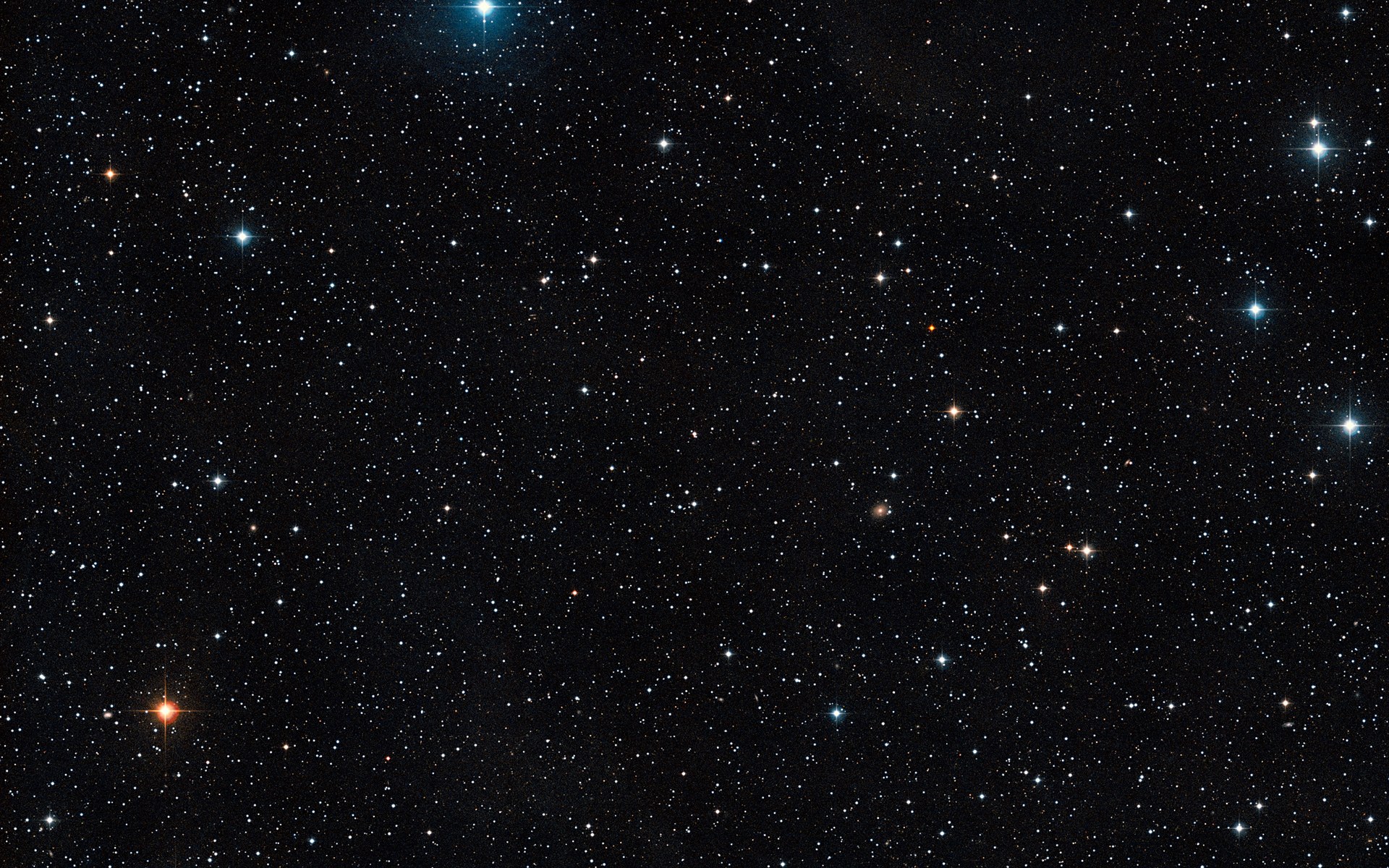
The satellite industry is planning to put 1.7 million new objects in low-Earth orbit, and astronomers say that would effectively end ground-based optical astronomy as a serious science. The European Southern Observatory published a study this week that tallies the damage: bright streak contamination, background sky glow, and operational windows that shrink to nothing. The number of satellites already in orbit has nearly doubled in less than three years to more than 14,000, dominated by SpaceX's Starlink fleet. The proposed additions are two orders of magnitude larger.
ESO's recommendation is direct. No more than 100,000 satellites should orbit Earth, and every one of them must be faint enough that a person at a dark-sky site cannot see it with the naked eye. "But 100,000 causes losses at about the level of other technical losses, such as equipment failure." That limit is not arbitrary. It is the threshold at which satellite interference matches the normal technical losses from instrument noise and equipment failure. Above it, the losses compound faster than the science can route around them.
THE STORY OF TWO PROPOSALS
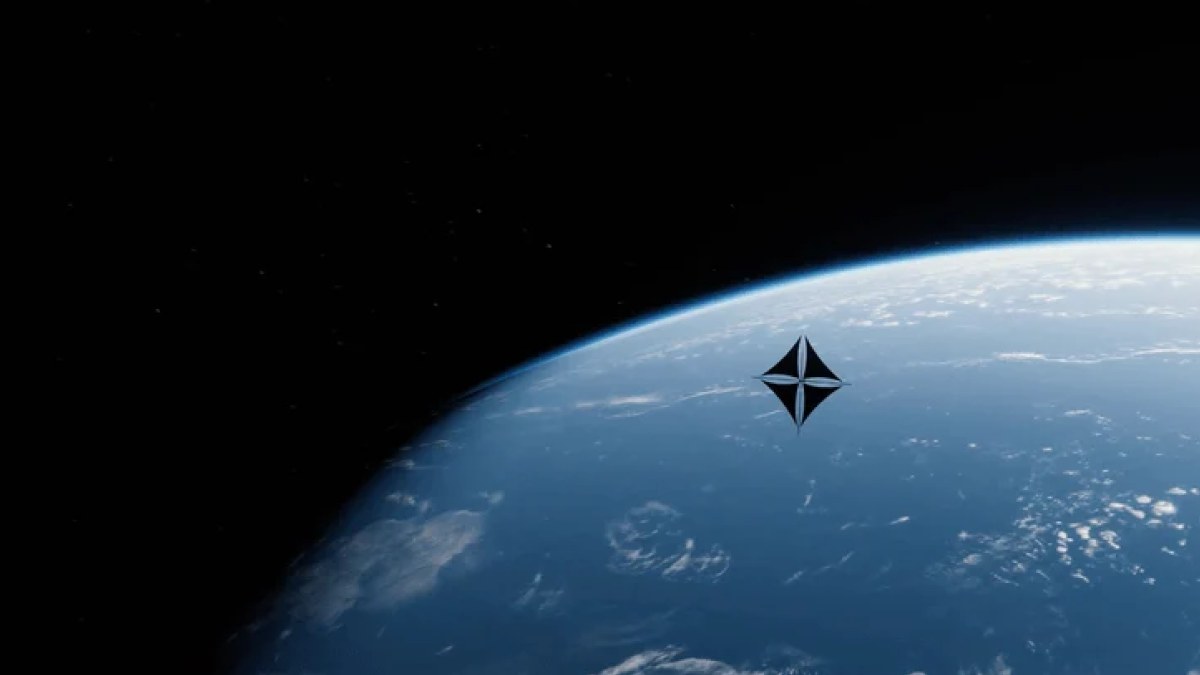
The study lands in the middle of two active FCC filings. SpaceX has disclosed plans to launch up to 1 million satellites for space-based data centers. Reflect Orbital wants to put 50,000 mirror satellites into orbit to reflect sunlight down to Earth at night, a commercial scheme that would make its satellites the brightest objects ever placed in orbit. The FCC has received more than 1,800 comments on Reflect Orbital's application and nearly 1,500 on SpaceX's filing.
Reflect Orbital's design is where the astronomy community hits a wall. Seen from within the reflected beam, a single mirror satellite would appear four times brighter than the full moon. Even from off-axis, its trail would shine as bright as the planet Venus. From a light-polluted city like Munich, hundreds of these satellites would be the only points of light visible in the night sky. The study is the first to model not just individual streaks but the contribution of satellite constellations to overall background sky brightness. With the full 50,000-satellite constellation, the sky would be three to four times brighter overall.
WHAT GETS LOST
The work explains the damage in concrete terms that even a non-astronomer can visualise. "Satellites, illuminated by the sun, are much brighter than distant galaxies. When a satellite crosses what we observe, it makes a bright streak on our image, zapping whatever is behind it." For SpaceX's proposed megaconstellation, a single two-hour observing window on ESO's Very Large Telescope would produce dozens of satellite trails per image, leading to field-of-view losses of up to 28 per cent. For the National Science Foundation's Vera C. Rubin Observatory, which is designed to survey the entire southern sky every few nights, the impact is even starker. If the satellites are even slightly brighter than the dimmest astronomical targets, most images captured in the first several hours of each night become unusable.
Reflect Orbital's mirror satellites would be catastrophic even as individual objects. A single reflection trail from one satellite can spoil an entire observation with a camera like Rubin's. There is no software fix for that. You cannot subtract a trail and recover the data behind it because the trail saturates the detector pixels.
THE REGULATORY BOTTLENECK
ESO submitted the study as part of a coordinated response to the FCC from the Royal Astronomical Society and the International Astronomical Union. "The ball is now in the FCC's court, and we wait to see the determinations they make on both filings. For optical astronomy, this is an existential threat, and we hope that the regulators will share that view." The quote is a clear statement of stakes from Betty Kioko, an ESO official. The FCC has broad authority to condition or deny launch licenses based on public interest, including impacts to science. But the agency has historically treated orbital licensing as a ministerial function, rarely pausing applications on environmental or scientific grounds.
This filing is different. The volume of public comments alone signals a political dimension that the FCC cannot ignore, and the environmental impacts extend beyond astronomy. The study notes that very bright constellations can disrupt biological clocks in humans and ecosystems, and that large constellations generate direct air quality damage from launch emissions and from satellite burn-up during re-entry.
WHAT THE LIMIT ACTUALLY MEANS
The 100,000 satellite cap is not a blanket ban on commercial space. It is a brightness-bounded cap. "Beyond the limit": The limit applies to satellites fainter than visual magnitude 7, roughly the dimmest object visible from a truly dark site with no light pollution. If a satellite is brighter, the allowed total crashes down. The math is simple: one Reflect Orbital mirror satellite, which glows at Venus-level brightness or brighter, would count against the cap in proportion to its brightness. The 50,000-satellite constellation could consume the entire 100,000-satellite budget all by itself.
THE BIGGER QUESTION
The phrase appears multiple times in the materials. It is not hyperbole. "The large number of planned satellites in low-Earth orbit challenges that capacity, underscoring the need to limit future satellite launches and for astronomers, engineers, satellite operators and other stakeholders to work together to adopt strict mitigation measures." The infrastructure that built modern astronomy, from the discovery of dark energy to the first image of a black hole, depends on dark skies that are rapidly filling with active light sources. No ground-based telescope can avoid them at scale.
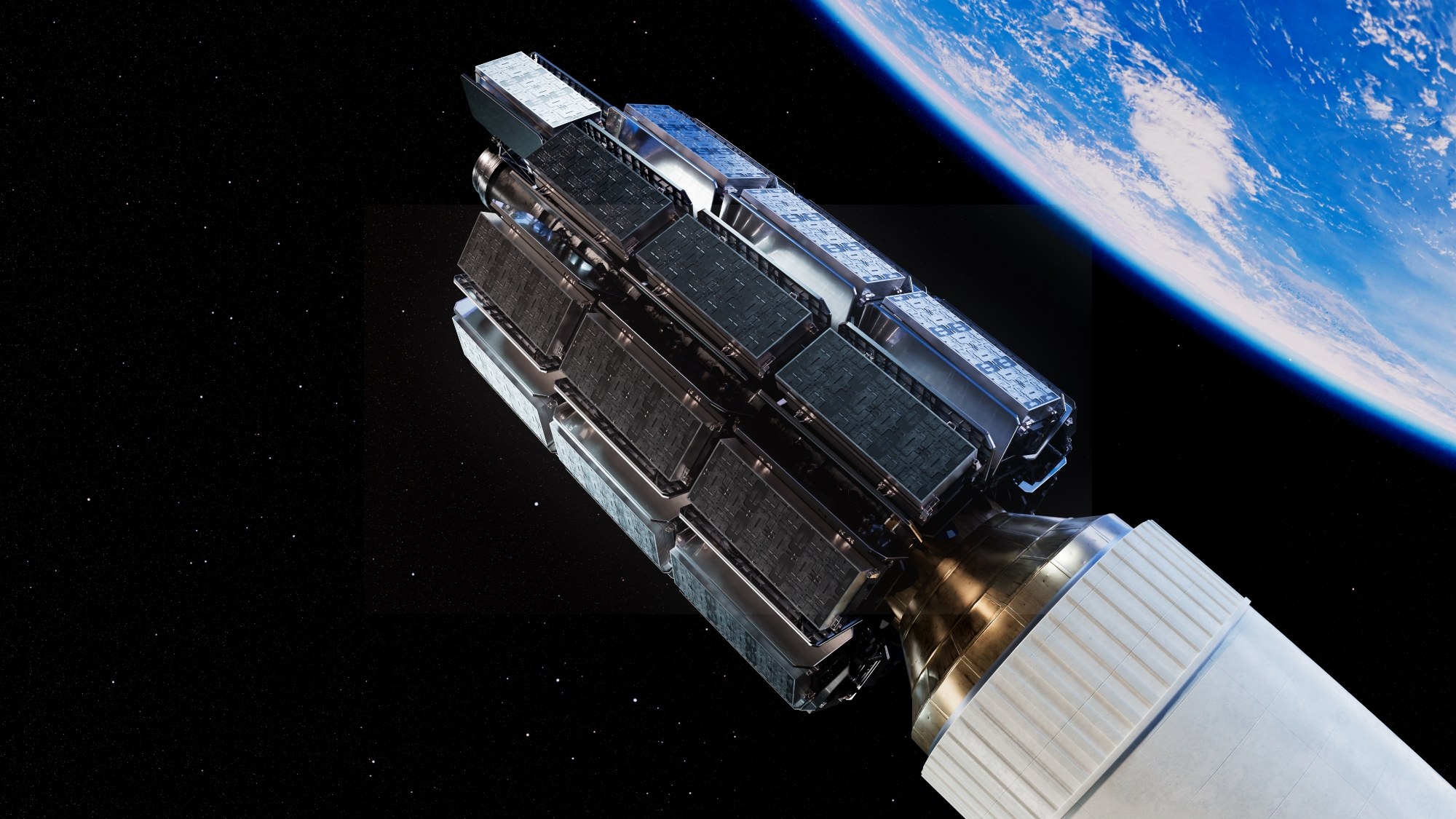

"Low Earth orbit is a celestial seashore that provides immense value to modern life, from global connectivity to our clear access to the universe. However, we must manage the footprint of mega-constellations—from the light pollution affecting astronomy to the atmospheric effects of satellite re-entry—to ensure this resource remains pristine and accessible for future generations." Low Earth orbit is finite, and it is already crowded. The commercial incentives to fill it are aligned against a scientific community that cannot launch its own competing satellites and cannot move the telescopes. The question before regulators is whether the orbital commons can be partially preserved for science, or whether the market will be allowed to take the whole thing.
what did you make of it?
more from space
space
SPACEX ABORTS STARTSHIP FLIGTH 13 AFTER ENGINES FAIL TO IGNITE
An automatic abort kicked in when some Raptor engines on the Super Heavy booster didn't light; two engines will be replaced before the next try.
space
FFC APPROVES SPACE MIRROR: REAL ISSUE IS THE OTHER MILLION SATELLITES
Reflect Orbital gets a license to test sunlight reflection, while SpaceX files for 40 times as many satellites as have ever been launched.
space
ISPACE BUYS 500KG OF PAYLOAD SPACE ON LUNAR LANDER STARSHIP
The Japanese firm will develop a rover to deliver customer payloads up to a few kilometers across the lunar surface, targeting a 2030 launch.
space
JWST SPIES A WARM HAZY JUPITER ORBITING A DEAD STAR
Astronomers have measured the atmosphere of a planet orbiting a white dwarf for the first time, and it is surprisingly warm and full of methane.