SPACEX ABORTS STARTSHIP FLIGTH 13 AFTER ENGINES FAIL TO IGNITE
An automatic abort kicked in when some Raptor engines on the Super Heavy booster didn't light; two engines will be replaced before the next try.
by editor5 min readcomments soon
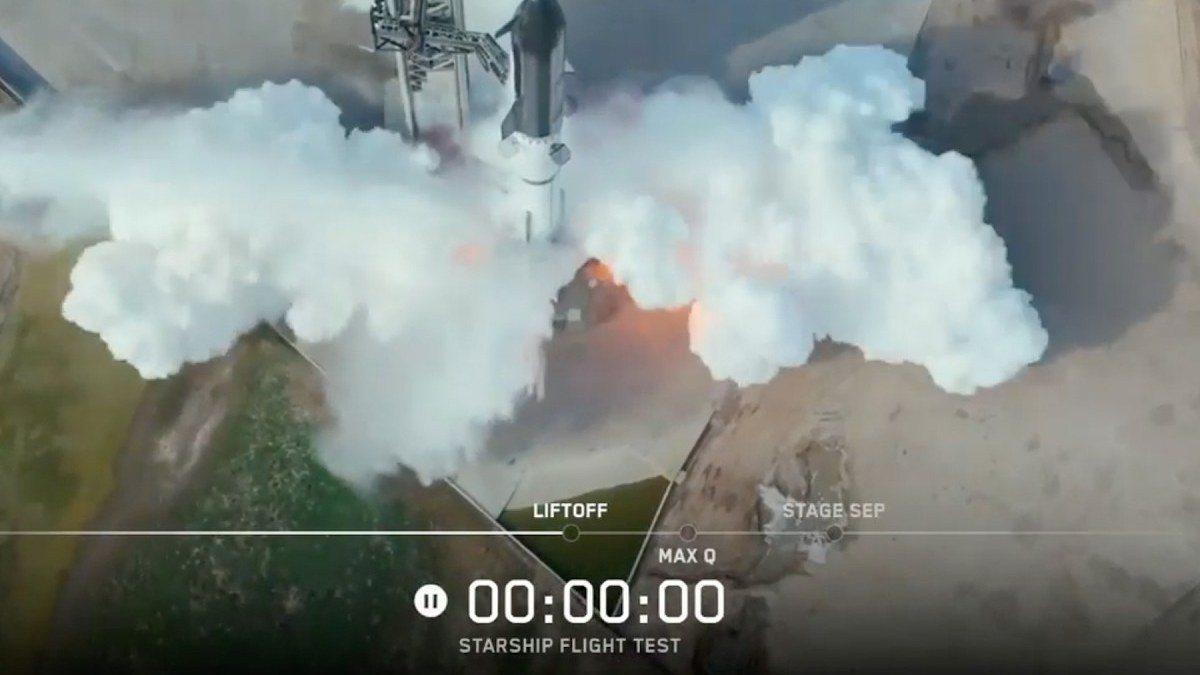
SpaceX aborted the launch of Starship Flight 13 on July 16 because several of the vehicle's Raptor engines failed to ignite. The Super Heavy booster started its engine sequence at the scheduled 6:45 p.m. Eastern liftoff time from Starbase, Texas. Still, some engines did not fire, triggering an automatic abort that shut everything down before the vehicle moved. SpaceX called off the attempt for the day.
Elon Musk posted within ten minutes that the next launch attempt would hopefully come in a few days. He later added that two Raptor engines will be removed and replaced, and that the most probable launch timing is early next week. The quick turnaround timeline suggests the issue is isolated to those specific engines rather than a systemic problem with the booster's propulsion architecture.

WHAT FLIGHT 13 WAS SUPPOSED TO DO
Flight 13 is the second test flight of Starship V3, the upgraded version of the vehicle that SpaceX intends to use for future orbital missions. Like Flight 12 on May 22, this was planned as a suborbital test. The main difference from earlier flights: Flight 13 carries cargo that actually does something.
For the first time, a Starship test flight carries functioning Starlink V3 satellites instead of mass simulators. Twenty of them are packed inside the upper stage. Once Starship reaches space, the satellites will deploy and spend about 20 minutes running tests before reentry. SpaceX engineer Tyler Lionquist described it as a deployment and communications test, part of the company's iterative approach. "This is all part of SpaceX’s iterative process to technology advancement."
The satellites won't survive reentry, but the 20-minute window is enough to verify that the deployment mechanism works, that the solar arrays and antennas unfold, and that the satellites can talk to ground stations and other Starlink spacecraft. If those tests succeed, the next logical step is to start leaving satellites in orbit, which is the entire point of the Starship program as a revenue-generating vehicle.
STARLINK V3: A JUMP WORTH TALKING ABOUT
The satellites on Flight 13 represent a massive upgrade to the Starlink constellation. Each V3 satellite delivers 1 terabit per second of downlink capacity, ten times better than existing Starlink satellites. Uplink capacity is 160 gigabits per second, a 22-fold improvement. The upgraded phased-array antennas and backhaul antennas across the Ka-, E-, V-, and W-bands improve capacity by a factor of 8. Solar arrays generate twice as much power as the V2 satellites.
These V3 satellites are larger and more powerful than anything currently in orbit, and are optimised specifically to launch on Starship. The design only makes sense if Starship can deliver them to orbit in volume. If Starship cannot fly reliably, the business case for building V3 at scale is on hold. That is the pressure behind each test flight: the hardware and ground infrastructure are ready, and regulatory approvals are in motion. However, the rocket still needs to prove it can consistently ignite its engines.
STOCKMARKET FELT THE ABORT
SpaceX went public on June 12, so this abort was the first Starship launch attempt under public market scrutiny. Before the abort, shares were trading at about $132 in after-hours activity. When news hit that engines had failed and the launch was scrubbed, the stock dropped to nearly $125 before rebounding to $127.
Earlier in the day, shares closed at $131.11, below the initial public offering price of $135 for the first time. That is not a catastrophe for a stock that has only been publicly traded for a month, but it adds a new layer of narrative pressure. Every delayed launch now has a real-time stock-price ad attached to it, and the market is not patient with repeated mechanical failures on a flagship product.
WILL FLIGHT 14 BE LUCKY?
Two Raptor engines need to be pulled off the Super Heavy booster and replaced. That is a routine operation at Starbase, where spare engines and test stands are on site. The turnaround time Musk suggested (early next week) is aggressive but plausible if the root cause is simple: a sensor, a valve, a seal, or a software timing issue that only manifests on certain serial numbers.
Flight 13 already incorporated changes from Flight 12, which saw the Super Heavy booster fail to execute a controlled splashdown in the Gulf of Mexico and lost one of the six engines on the Starship upper stage. The iterative model means each abort generates data. Ignition failures are well understood in rocket engineering, and SpaceX has plenty of experience diagnosing them. The question is whether the fixes will stick.



For now, the rocket stays on the pad. Two engines come off, new ones go on, and the countdown clock resets. The 20 Starlink V3 satellites inside the payload fairing are still waiting for their 20 minutes of test time. And the stock is waiting for a clean launch to stop the bleeding.
what did you make of it?
more from space
space
FFC APPROVES SPACE MIRROR: REAL ISSUE IS THE OTHER MILLION SATELLITES
Reflect Orbital gets a license to test sunlight reflection, while SpaceX files for 40 times as many satellites as have ever been launched.
space
ISPACE BUYS 500KG OF PAYLOAD SPACE ON LUNAR LANDER STARSHIP
The Japanese firm will develop a rover to deliver customer payloads up to a few kilometers across the lunar surface, targeting a 2030 launch.
space
ASTRONOMERS SAY 1.7MN SATELLITES WOULD DESTROY GROUND BASED ASTRONOMY
A new ESO study calculates that proposed megaconstellations would make large telescope images unusable for hours each night.
space
JWST SPIES A WARM HAZY JUPITER ORBITING A DEAD STAR
Astronomers have measured the atmosphere of a planet orbiting a white dwarf for the first time, and it is surprisingly warm and full of methane.