REFLECTION AI COMMITS $150M A MONTH TO SPACEX FOR CHIPS
The two-year-old startup is spending up to $6.3 billion on compute at SpaceX's Colossus 2 data center, a fraction of what Anthropic and Google pay but a bet on open-weight AI.
by editor6 min readcomments soon
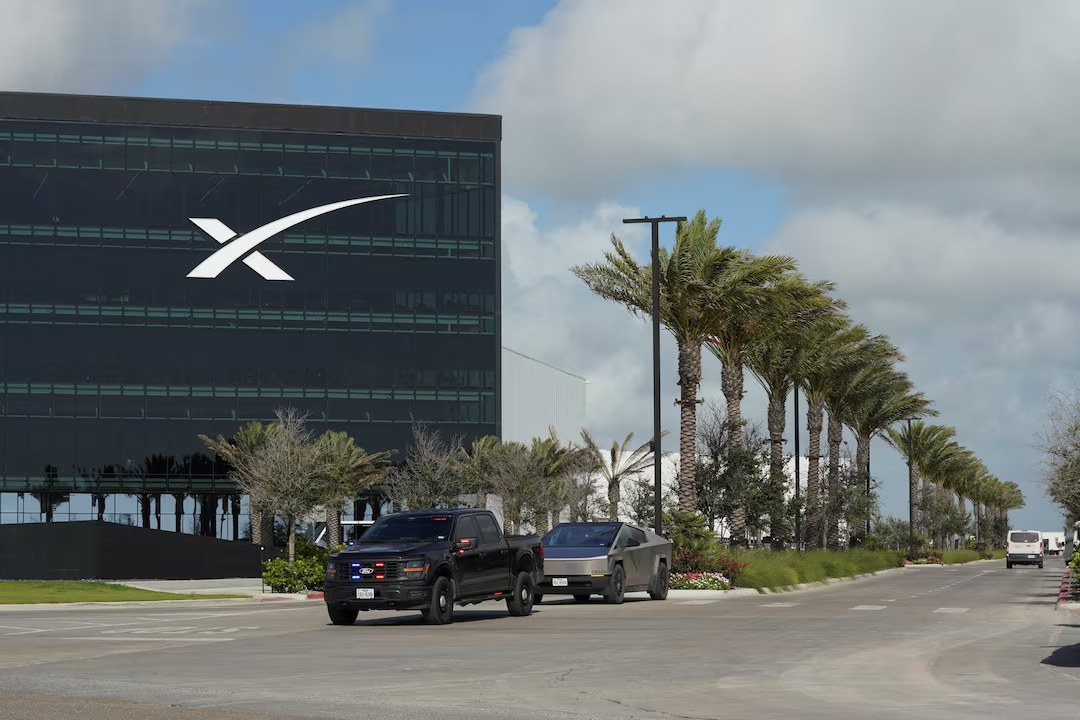
Reflection AI, a two-year-old startup founded by former Google DeepMind researchers, has signed a deal to pay SpaceX $150 million a month starting July 1, 2026, for access to Nvidia's latest GB300 AI chips at the Colossus 2 data center near Memphis, Tennessee. The contract runs through 2029 and is worth up to $6.3 billion.
The deal is big, but not the biggest in SpaceX's growing compute-rental business. Anthropic pays $1.25 billion a month for similar access. Google pays $920 million. Both of those contracts also run through July 2029. Reflection's commitment is roughly a tenth of Anthropic's monthly burn. The gap between the memberships says something about where the industry sees the compute market heading and who is willing to pay what to secure it.


THE ART OF THE DEAL
The monthly payment is $150 million, beginning on July 1, 2026, and continuing through 2029. Either company can end the contract with 90 days' notice after the first three months. That escape hatch is unusual for a deal of this size. Most infrastructure commitments lock in the customer for the full term because the supplier is building out capacity around projected demand. SpaceX appears to have structured this as a flexible arrangement, possibly because the Colossus data centre was originally built for xAI's own AI efforts, and xAI's internal focus has since shifted.
Elon Musk has publicly downplayed the three-year term, emphasising that the contracts can be cancelled at any time. That framing is convenient for a company that might want to reallocate its own chip supply later, but it also signals that Musk views compute leasing as a liquid market rather than a locked-in partnership. For Reflection, the flexibility cuts both ways. If the startup grows fast enough to need more capacity, it can renegotiate or walk. If it stalls, it can cut losses after three months.
THE OPEN-WEIGHT BET
Reflection plans to use the computer to build open-weight AI models. The company positions itself as an open-source alternative to closed frontier labs like Anthropic and OpenAI. A spokesperson framed the deal as a response to the shifting regulatory landscape: "Recent events highlight how important open source is to the AI ecosystem, with more nations and enterprises recognising the risks and costs associated with exclusively depending on closed models."
The quote references a recent U.S. government ban on Anthropic's closed models, Fable and Mythos. That ban has injected new energy into the open-weight movement. Governments and enterprises that relied on Anthropic's models now need alternatives, and Reflection is making a direct pitch: open source models that can be audited, modified, and self-hosted, with the compute to train them at scale.
Another spokesperson added: "Our deal with SpaceXAI signals Reflection’s strategic importance within the frontier AI ecosystem, and more compute means more runway to build the world’s best open models at scale."
That language is worth paying attention to. Reflection is not the largest player in this space, but it is one of the few startups with a dedicated compute commitment of this size dedicated entirely to open-weight development. The $6.3 billion headline makes it one of the largest announced open AI infrastructure commitments to date.
THE SPACEX COMPUTE BUSINESS
The Colossus data centre near Memphis was originally built by xAI for its own training workloads. When xAI's internal pursuits faltered, SpaceX, which holds a large stash of Nvidia AI chips, began renting out that capacity to top AI labs. The business model is straightforward: buy chips, build a data centre, and lease the compute at a premium to companies that cannot get their own allocation. SpaceX's advantage is access. NVIDIA's GB300 chips are in short supply, and the lead times for large clusters stretch into years. SpaceX has them now.
The deals with Anthropic and Google established the high end of the pricing curve. Reflection's deal sits below both, but the monthly fee of $150 million is still significant enough to put Reflection in the same strategic conversation. The company is effectively buying its way onto the frontier training compute map, and the price tag is the credential.
THE MARKET SIGNAL
The deal is a signal that open-weight AI is no longer a cottage industry. A startup founded in 2024 can secure a multi-billion-dollar compute contract before it has shipped its flagship model, because investors and suppliers are betting that open models will capture a growing share of enterprise and government adoption. The U.S. ban on Anthropic's closed models accelerated that timeline, but the trend was already underway.
Reflection's open-weight strategy also puts it in direct competition with Meta's Llama series and Mistral, both of which have released competitive open models without making multi-billion-dollar compute commitments. The difference is scale. Reflection is buying enough compute to train at the frontier, not just fine-tune existing open weights. If it succeeds, it will have the capability to produce top-tier models that rival closed labs. If it fails, the $6.3 billion price tag (or whatever portion of it gets spent before cancellation) will be a cautionary tale about capital efficiency in AI.
RISK OF ESCAPE CLAUSE
The 90-day cancellation clause is the most interesting detail. It means the deal is less of a commitment than an option. Reflection can walk away after three months with minimal penalty. That reduces the downside risk for the startup, but it also means SpaceX cannot count on the $6.3 billion as guaranteed revenue. The deal's total value is "up to" $6.3 billion.
For SpaceX, the structure makes sense if it has multiple customers lined up for the same compute. If Reflection cancels, SpaceX can backfill with another lab. The market for GB300 compute is tight enough that any freed capacity will find a home quickly. For Reflection, the structure makes sense because it provides runway without locking the company into years of payments if its model fails to gain traction.
What the deal does not answer is how much compute Reflection is actually getting for $150 million a month. The size of the cluster is not specified. It could be a few thousand GB300 chips or tens of thousands. Without that number, it is impossible to compare Reflection's cost per chip to Anthropic's or Google's. The market is opaque by design. All we know is the price.
THE TAILWINDS
Reflection AI has placed one of the largest bets on open-weight AI to date. The deal with SpaceX gives it the compute muscle to train at the frontier, the flexibility to exit if things go wrong, and the marketing narrative of a startup taking on the closed labs. The government ban on Anthropic's models gives the open-weight pitch a tailwind, but the technology still has to deliver. Compute is not a model. It is just the raw material.

The next two years will show whether Reflection can turn $150 million a month into something that competes with Anthropic and OpenAI, or whether the money runs out before the models do. For now, the startup has a seat at the table. The bill is due in July 2026.
what did you make of it?
more from ai
ai
TSMC ADDS $100 BILLION TO ARIZONA CHIP BET, TOTAL HITS $265 BILLION
The additional investment will build at least four more 2nm fabs and advanced packaging, bringing the company's total US commitment to $265 billion.
ai
META WILL ALERT PARENTS IF TEENS DISCUSS SUICIDE WITH META AI
The opt-in feature flags self-harm references in chatbot conversations, with human review before any notification is sent.
ai
ROBLOX'S "BUILD" LETS ANYONE MAKE A GAME FROM THEIR PHONE WITH AI
The new toolset, launching July 28, turns text prompts into playable experiences and puts game creation on iPhone and iPad.
ai
ZOOX REALLS ENTURE ROBOTAXI FLEET OVER SMOKE DETECTION FAILURE
A robotaxi drove into an active fire scene obscured by smoke. NHTSA called emergency scenes not edge cases.