SOLAR-HYDRO HYBRID GIVES IRRIGATION COMMUNITIES A BUILT IN BATTER
A study from the University of Córdoba shows how pumping water uphill with solar panels turns a reservoir into a clean-energy battery for farming.
by editor6 min readcomments soon
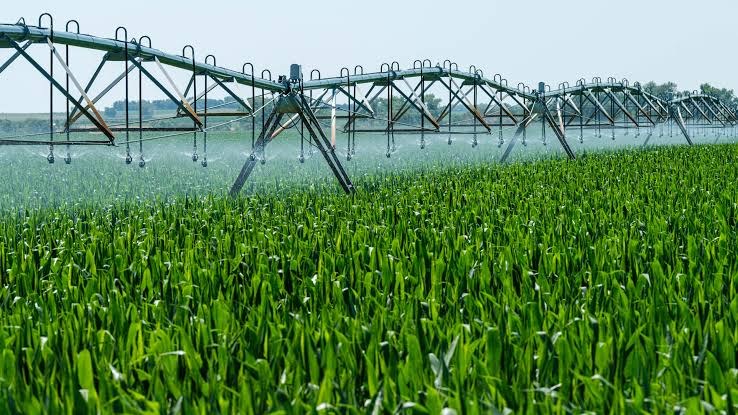
A team at the University of Córdoba has modelled a hybrid solar-hydro system that solves the oldest problem in solar-powered irrigation: farms need water when the sun is not shining. Their approach uses photovoltaic panels to pump river water to an elevated reservoir, which then functions as a gravity-fed battery, releasing stored water to generate hydropower on demand.
The case study is the Margen Izquierda del Genil irrigation community in Andalusia, Spain, a collective that covers 6,000 registered hectares (roughly 14,800 acres) across three municipalities: Lora del Río, Peñaflor, and Palma del Río. The community is already finalising a 9-megawatt-peak solar plant, but the study shows how that plant could be paired with a pumped-storage system to break free from the sun's schedule.


“In previous studies on solar energy use by irrigation communities, we saw that the challenge was to match energy availability with irrigation needs,” said Maaike Van de Loo, a researcher at the University of Córdoba and lead author of the study published in the Journal of Cleaner Production. "In previous studies on solar energy use by irrigation communities, we saw that the challenge was to match energy availability with irrigation needs."
THE FOUR SCENARIOS
The researchers analysed real data from 2021 to 2024 and modelled four energy strategies for the community. The first scenario relies entirely on conventional electricity from the grid, making profitability a hostage of market prices. The second adds a photovoltaic plant for the community's exclusive use, cutting conventional energy consumption by up to 7 per cent but tying irrigation schedules to daylight hours and requiring conventional backup for cloudy stretches and nighttime.
The third scenario lets the community sell surplus solar energy back to the grid, providing an immediate financial benefit but still not solving the temporal mismatch between generation and need. The fourth scenario is where it gets interesting: solar panels pump water from the GenRiverver 80 meters (about 262 feet) up to an elevated reservoir, and the same water is released through a turbine to generate electricity when irrigation demands it.
“Instead of using the energy directly and exclusively for irrigation, they use it to pump water to that reservoir, which expands their possibilities,” Van de Loo said, calling the arrangement a source of "flexibility" for the community. "Instead of using the energy directly and exclusively for irrigation, they use it to pump water to that reservoir, which expands their possibilities"
WHY THE HYBRID WINS
The fourth scenario is projected as the most resilient system overall. It overcomes the two main constraints that have historically limited solar irrigation: electricity price volatility and the absence of sunlight during critical watering hours. By storing gravitational potential energy rather than electrons, the system sidesteps battery costs and complexity. The reservoir itself becomes the energy storage medium, and the only moving parts are the pumps and the turbine.
The study was conducted under the HY4RES project, which focuses on hybrid solutions for renewable energy systems. The team included Rafael González Perea, Emilio Camacho Poyato, and Juan Antonio Rodríguez Díaz, all from the University of Córdoba's Department of Agronomy (DAUC)
WHAT THIS MEANS IN PRACTICE
For irrigation communities, the implications are straightforward. Solar-only systems force farmers to either water during the day (when evaporation rates are highest) or maintain a conventional grid connection for nighttime irrigation. A pumped-storage hybrid eliminates that trade-off. Water can be lifted during peak solar hours and released whenever the crops need it, at any hour, with no additional fuel cost and no carbon emissions.
The 70 per cent reduction in conventional energy use seen in scenario two is already significant. Scenario four pushes that number further while adding energy sovereignty: the community is no longer at the mercy of wholesale electricity markets or utility rate structures. The reservoir acts as both a buffer and a battery, and the marginal cost of each additional unit of water lifted is essentially zero once the solar panels are installed.
THE SCALING QUESTION
Andalusia is a natural test bed for this model. The region has abundant solar irradiation, a long growing season, and irrigation communities that already manage shared water infrastructure. The GeRiveriver provides a reliable water source,ce and the local topography offers the elevation gain needed for pumped storage without expensive civil works. Not every irrigation district will have those conditions, but many Mediterranean and semi-arid farming regions do.
The study does not provide a detailed cost-benefit analysis of the storage component (the reservoir and turbine), but the authors note that the community's 9-MW solar plant is already being built. Adding a pump and a penstock to an existing irrigation reservoir is a much smaller capital outlay than building a new solar farm from scratch. The economic case improves as grid electricity prices rise and solar panel costs continue to fall.
THE LARGER INDUSTRY CONTEXT
Solar energy is becoming increasingly popular in industries seeking alternatives to conventional markets because of price fluctuations. Farms are among the most enthusiastic adopters, with photovoltaic installations now common in agricultural communities worldwide. But the adoption has been limited by the mismatch between solar availability and irrigation demand, a problem that has pushed solar into an auxiliary role in the sector.
This hybrid model could shift that positioning. If it proves economically viable at scale, it turns the irrigation community from a consumer of intermittent renewable energy into a producer of dispatchable clean power. That is a fundamentally different value proposition, and one that energy regulators and grid operators are likely to take seriously.
The University of Córdoba study is not the first to propose pumped-storage irrigation, but it is one of the few to model it against real consumption data over a multi-year period. The four-scenario framework gives other communities a template for evaluating their own options, and the HY4RES project will continue developing similar hybrid models for other renewable energy contexts.


For now, the Genil Margen Izquierda community has a blueprint for turning its 9-MW solar plant into something more useful than a daytime-only power source. The next step is building it and seeing whether the theory holds in the field.
what did you make of it?
more from climate & energy
climate & energy
CANADIAN WILDFIRE TURNS US SKIES YELLOW AS 800 FIRES RAGE ON
New York City hit an AQI of 200, and the Twin Cities were rated “hazardous” as winds carried smoke from over 800 Canadian wildfires southeast.
climate & energy
EU GAS PRICES SKYROCKET AS QATAR HALTS ALL MARITIME ACTIVITY
The Dutch TTF futures jumped 3.35% after a weekend of renewed U.S.-Iran hostilities and the first blanket shipping suspension by a Gulf state.
climate & energy
CALIFORNIA SETS NEW EV INCENTIVES, REWARDS LOCAL MAKERS AND SNUBS TESLA
A $135M program waives price caps for Rivian and Lucid while Tesla, which moved its HQ to Texas, gets no such break.
climate & energy
OPEC+ HIKES OUTPUT AGAIN AS FRAGILE PEACE RESHAPES OIL MARKET
The UAE quit, the Strait of Hormuz is reopening, and retail traders will soon place 10-barrel bets around the clock.