LIFE BIOSCIENCES DOSES FIRST PATIENT IN REVERSE AGING TRIAL
A Boston company founded by Harvard's David Sinclair is testing whether reprogramming cells can restore vision lost to glaucoma and NAION. The eye is the testing ground.
by editor4 min readcomments soon
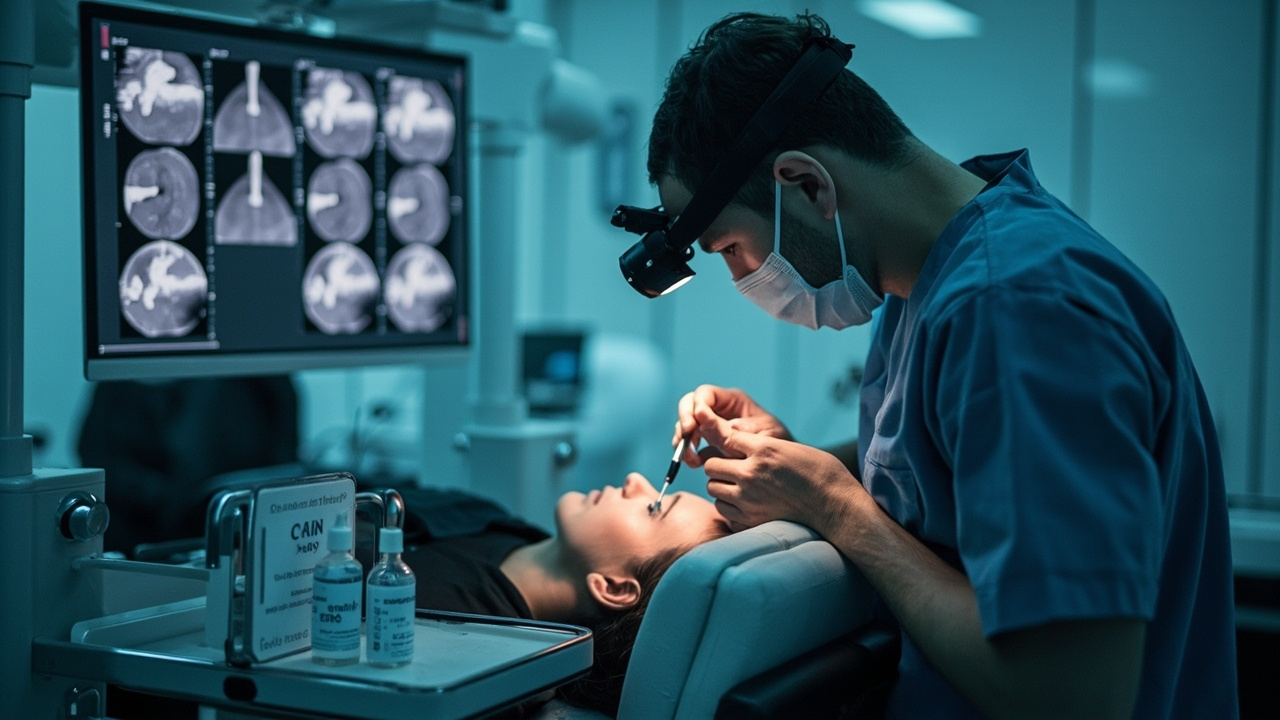
Life Biosciences has dosed its first patient in a clinical trial testing whether gene therapy can reverse aging at the cellular level. The treatment, called ER-100, targets patients with glaucoma and NAION, conditions that damage retinal ganglion cells in the optic nerve and cause irreversible vision loss.
The therapy works by injecting a modified virus carrying engineered genes into the eye. These genes reprogram aging cells to reverse epigenetic changes that accumulate over time, effectively turning back the cellular clock. The treatment is only activated when patients simultaneously take the antibiotic doxycycline, giving doctors a kill switch if something goes wrong.



The eye was not chosen arbitrarily. It is a relatively isolated organ, which means unintended consequences are less likely to spread beyond the injection site. That containment matters because the underlying technology carries real risk.
THE SCIENCE BEHIND IT
The approach builds on Shinya Yamanaka's Nobel Prize-winning discovery that four specific genes can reprogram adult cells back into a youthful state. David Sinclair's lab at Harvard Medical School adapted this for therapeutic use, arguing that aging is driven by loss of epigenetic information rather than irreversible damage. If that information can be restored, the theory goes, cells can recover their youthful function.
But Yamanaka factor genes have a dark history. Earlier experiments produced teratomas, benign tumors made of multiple tissue types, because uncontrolled reprogramming tells cells to grow without the normal brakes. Some researchers worry that reprogramming therapies might cause runaway cellular growth similar to tests that may have caused cancer in mice.
Life Biosciences claims ER-100 restored vision in monkeys. The company received FDA clearance to begin human trials and dosed its first patient roughly four months later. The initial study will enroll 18 adults over one year, primarily testing safety and side effects. ER-100 is the first cellular-rejuvenation therapy using this technology to enter human clinical trials.
THE SINCLAIR ECOSYSTEM
Sinclair co-founded Life Biosciences and has been building a parallel track through the XPrize Foundation competition, which is offering $101 million for a therapy that can restore ten years of life within one year of treatment. He plans to develop an oral version of his genetic reprogramming drugs for that competition.
The XPrize path is revealing. One of Sinclair's competitors recently created a toxic bloom of unwanted lipids in their test mice, a stark reminder that the biological margins of error in cellular reprogramming are narrow. The eye trial, with its 18-patient scope and doxycycline safety switch, is designed to stay well inside those margins.
Life Biosciences is also developing applications beyond vision, including fatty liver disease. The company is based in Boston and has attracted major interest across the biotech sector, where the potential to reverse cellular aging has been a longstanding grail.
Sinclair framed the moment directly: our research has suggested that aging is driven in large part by the loss of epigenetic information, not irreversible damage. This clinical study represents the first opportunity to test whether restoring that information can "ameliorate human disease".
WHAT TO WATCH FOR
Eight weeks is the duration of gene activation in the current protocol. That window is short by design, limiting exposure to the reprogramming signals. If the trial clears that phase without serious adverse events, the next question is whether the effect holds: did the retinal ganglion cells actually rejuvenate, or did the treatment merely temporarily wake them up?
The study size is small and the timeline is one year. Even a clean safety profile does not prove efficacy. But this is the first time anyone has put cellular aging reversal into a human being with the intent of treating disease. The field has been building toward this moment for two decades. Whether it works or not, the data coming out of this trial will shape the entire longevity field.
what did you make of it?
more from science
science
IBM UNVEILS SUB 1NM CHIP WITH 100 BILLION TRANSISTORS
A new nanostack architecture doubles transistor density over the 2nm node, adding 10-15 years to the semiconductor roadmap.
science
ARXIVLABS OPENS PREPRINT SERVER FOR COLLABORATIONS
arXiv invites outside developers who share its values of openness, community, excellence, and privacy.
science
NOAA CONFIRMS El NINO IS HERE, COULD BE THE STRONGEST IN 140 YEARS
Oceans have absorbed 23 zettajoules of heat in recent years, the equivalent of 365 million atomic bombs. Now the climate system's best-known disruptor is loading…
science
SCIENTISTS DISCOVER OLDEST WHALE GRAVEYARD
A 2023 expedition found 476 fossilized whales and at least five active whale falls in the Diamantina fracture zone, some dating back 5.3 million years.