SCIENTISTS DISCOVER OLDEST WHALE GRAVEYARD
A 2023 expedition found 476 fossilized whales and at least five active whale falls in the Diamantina fracture zone, some dating back 5.3 million years.
by editor3 min readcomments soon
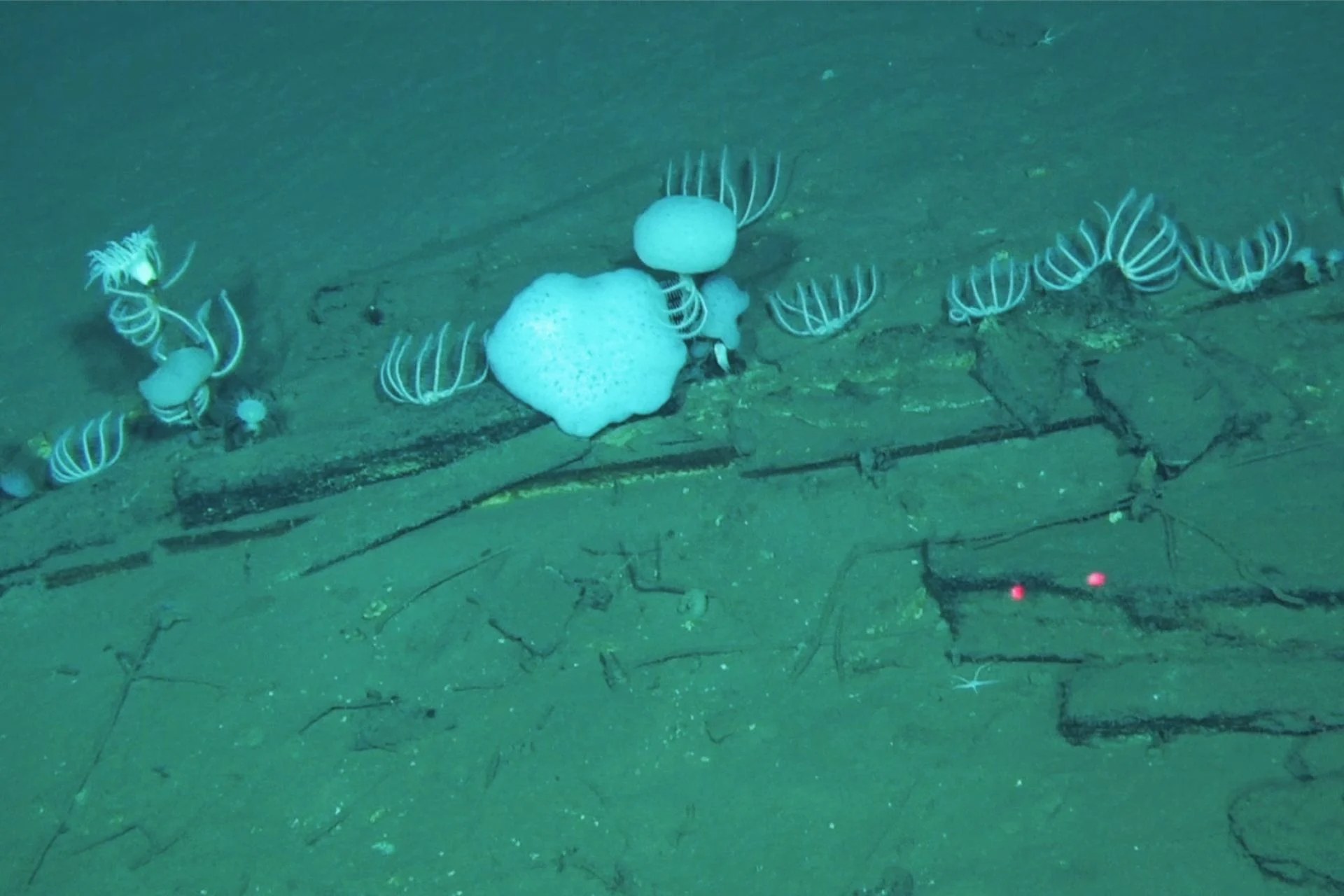
Researchers have discovered the oldest, deepest, and most extensive whale graveyard ever documented, a necropolis spanning 745 miles across the sea floor in the south-eastern Indian Ocean. The site, found in the Diamantina fracture zone, reaches depths of more than 7,000 metres, far deeper than any previously known whale fall.
The discovery came during a 2023 expedition that carried out 32 dives to the sea floor. What they found shattered expectations: 476 fossilized whales across 485 sites, with a density of approximately 800 skeletons per square kilometre. The team also documented at least five active whale falls, all in the sulfophilic stage where bone-eating worms colonize the remains.

"This discovery demonstrates that these extreme and unexplored environments are home to species and ecosystems still unknown to science, and that we are therefore still far from understanding the true biodiversity of our planet."
The oldest fossils date to 5.3 million years ago, making this not just the deepest but also the oldest whale fall on record. Previously, scientists had documented only about 70 whale fall sites worldwide, and most of those were found at depths of less than 4 kilometres. The previous deepest natural whale fall was discovered in 2016 at 13,792 feet.
WHAT IS THIS PLACE, WHY DOES IT EXIST
The Diamantina fracture zone formed between 60 million and 50 million years ago as Australia and Antarctica drifted apart, creating a rift valley that drops to extreme depths. Jon Copley of the University of Southampton suggested "such a necropolis probably results from being on a migration route for filter-feeding species, while also a good place for the hunter species to dive deep for squid, but perhaps pushing them perilously close to their limits as they dive into this crack in the ocean floor" This convergence of migration routes and diving grounds created a perfect storm for whale mortality over geological time.
Most remains belong to deep-diving beaked whales. Their dense skull bones resisted scattering, and the bones were often coated with ferromanganese oxides that formed a protective layer. Sediment reaches the deep sea at an incredibly slow rate, allowing bones to remain unburied for millions of years.
A LIVING ECOSYSTEM
The decaying carcasses were teeming with life: crustaceans, molluscs, bone-eating worms, and brittle stars. Researchers documented 35 broad groups of organisms surrounding the whale falls, and many of these species may be new to science. "Furthermore, it shows us that life can adapt and evolve even in extreme environments where light is absent and pressure is extremely high."
Whale falls create island-like habitats in the deep sea, supporting ecosystems with close ties to those thriving at hydrothermal vents. The discovery demonstrates that extreme, unexplored environments are home to species and ecosystems unknown to science.
Stephen J Godfrey of the Calvert Marine Museum described the graveyard as "a truly unique discovery" The team also named a new species, Pterocetus diamantinae, based on fossils found at the site.
"These findings reshape the understanding of the limits and biogeography of whale-fall ecosystems"



The findings suggest similar whale necropolises probably exist in other core beaked-whale habitats worldwide. For now, this single site has doubled the known whale-fossil sites on Earth and opened a window into deep-sea ecosystems that have operated in darkness for millions of years.
what did you make of it?
more from science
science
IBM UNVEILS SUB 1NM CHIP WITH 100 BILLION TRANSISTORS
A new nanostack architecture doubles transistor density over the 2nm node, adding 10-15 years to the semiconductor roadmap.
science
ARXIVLABS OPENS PREPRINT SERVER FOR COLLABORATIONS
arXiv invites outside developers who share its values of openness, community, excellence, and privacy.
science
NOAA CONFIRMS El NINO IS HERE, COULD BE THE STRONGEST IN 140 YEARS
Oceans have absorbed 23 zettajoules of heat in recent years, the equivalent of 365 million atomic bombs. Now the climate system's best-known disruptor is loading…
science
CORNELL RESEARCHERS RESTORE DISCARDED EV BATTERIES TO 95%
The DEER process soaks electrodes in an electrochemical solution to dissolve the degradation layer, allowing cleaned components to go straight back into new cells without…