CANADIAN WILDFIRE TURNS US SKIES YELLOW AS 800 FIRES RAGE ON
New York City hit an AQI of 200, and the Twin Cities were rated “hazardous” as winds carried smoke from over 800 Canadian wildfires southeast.
by editor5 min readcomments soon
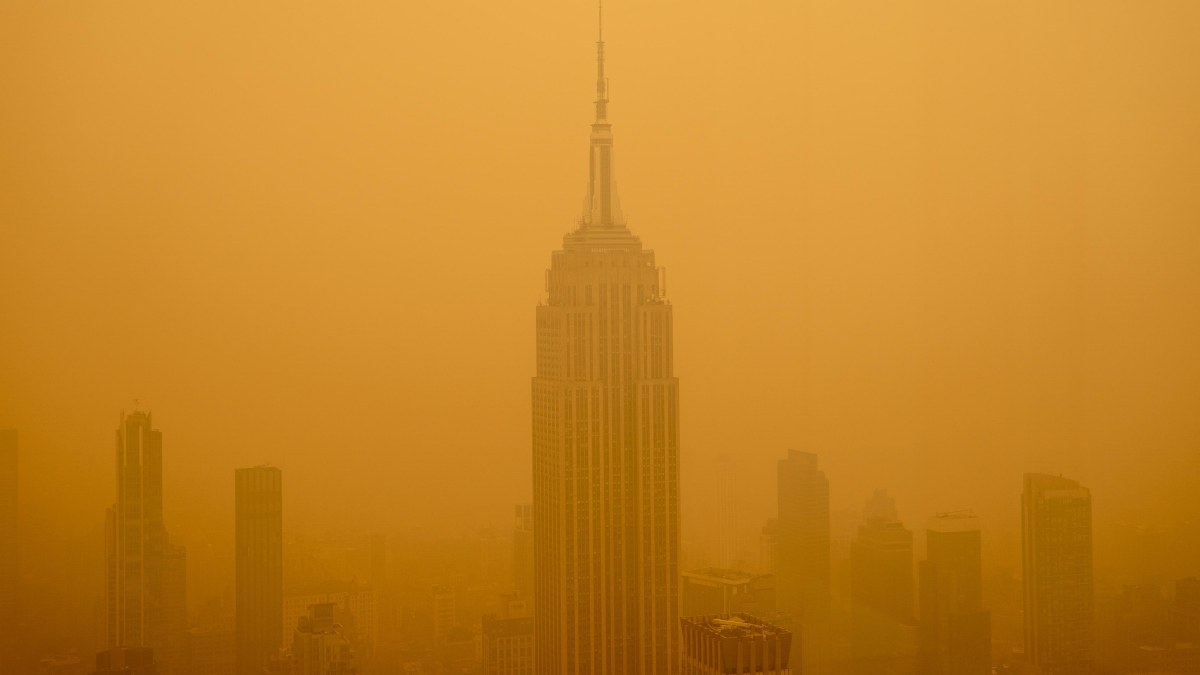
More than 800 wildfires are actively burning across Canada, and the smoke is now cascading into the United States. Skylines from Toronto to New York City to Minneapolis have vanished behind a yellow-grey haze. Air quality alerts stretched from the Great Lakes through the Midwest and into the Northeast, with some readings hitting the index.
Tinted skies are supposed to be rare. But here we are again. The VIIRS instrument on the NOAA-21 satellite captured the plume pouring eastward over both countries on July 14. By July 15, downtown Toronto was engulfed. The CN Tower became a ghost in the yellow murk. New York City followed, with the Statue of Liberty barely visible through the polluted air on July 15. By July 16, the city issued a health advisory based on an Air Quality Index forecast of 200, the upper end of the category.



THE SPREAD SO FAR
The fires are concentrated in western Ontario and northwestern Ontario, according to the satellite data. The smoke has not stayed in Canada. It has travelled southeast, covering Toronto, Ottawa, New York City, Chicago, Minneapolis, and many smaller communities in between. The Minnesota Pollution Control Agency categorised the air in the Twin Cities as on Wednesday. In Toronto, the Canadian government issued an orange air-quality warning, advising residents to limit time outdoors and cancel or reschedule outdoor activities.
The affected zone is enormous. If you live anywhere near the Great Lakes, the Mid-Atlantic, or even certain parts of the Mountain West, it is likely smoky where you are right now. The haze is not subtle. It turns the sun into a hazy, yellowish orb. It obscures landmarks. It gets into your lungs.
HEALTH TOLL OF A SINGLE DAY
One day or one hour of inhaling wildfire smoke can worsen pre-existing health conditions and increase the chance of premature death by 12%. That statistic comes from research on acute smoke exposure, and it should be scarier than it sounds. The smoke is full of tiny pollutants, particulate matter small enough to cross from the lungs into the bloodstream. These particles do not respect closed windows and sealed doors: they leak into apartments even when everything is shut tight.
The solution for indoor smoke is an air purifier, ideally one with a HEPA filter. For outdoor exposure, the advice is blunt: avoid it. Wear an N95 or KN95 mask if you have to go out. Reschedule outdoor sports, walks, and commutes where possible. This is not optional. The health effects of even a single day are measurable and damaging.
HISTORY REPEATING AND NOT REPEATING
This is not the first time Canadian wildfire smoke has turned American skies orange. In the summer of 2023, smoke from forest fires in Quebec blanketed 128 million people and turned the New York City skyline orange. That event was widely photographed and reported as a stunning, once-in-a-generation sight. Three years later, it is happening again. The 2023 fires were in Quebec. This year they are in Ontario. The geographic source shifts, but the pattern is the same: hundreds of fires, a river of smoke drifting south, and millions of people breathing air that would fail any sensible pollution standard.
There is a bitter irony in the yellow skies. Decades ago, before the Clean Air Act and targeted policy interventions, tinted skies were an everyday reality for New Yorkers. Coal smoke, industrial emissions, and unregulated tailpipes gave the city a perpetual brown haze. That was fixed through legislation, technology, and economic transformation. Now the smoke is back, but it is coming from a different direction: not from local smokestacks but from burning forests hundreds of miles away. The Clean Air Act cannot regulate a wildfire. The tools that cleaned up American cities cannot stop Canadian boreal forests from burning.
WHAT CAN YOU DO
The practical advice is straightforward, but it can be frustrating. Do not breathe the smoke. Keep windows closed. Run an air purifier if you have one. Wear a mask outdoors. Check the Air Quality Index for your location before planning your day. The AQI for New York City hit 200 on Thursday, and the Twin Cities peaked at which means everyone should be staying indoors, not just sensitive groups.
One strange side effect of smoky conditions: plants may actually thrive. The diffuse light and reduced sunlight can help some vegetation photosynthesise more efficiently. That is small comfort for humans, but it is a reminder that the ecological impacts of wildfire smoke are complex and not uniformly negative. For people, though, the calculus is simple. Smoke is dangerous, and the only safe amount to inhale is none.
THE LARGER PICTURE
The 800-plus fires burning right now are not an anomaly. The 2023 event was a wake-up call. The 2026 event is the alarm refusing to turn off.



For residents of the affected cities, the immediate priority is survival: mask up, shelter in place, wait for the wind to change. For policymakers, the question is harder. How do you build resilience into a system where the air can turn toxic from fires you have no control over? That question does not have a quick answer. What it does have is an annual deadline, and the deadline keeps arriving earlier each year.
what did you make of it?
more from climate & energy
climate & energy
EU GAS PRICES SKYROCKET AS QATAR HALTS ALL MARITIME ACTIVITY
The Dutch TTF futures jumped 3.35% after a weekend of renewed U.S.-Iran hostilities and the first blanket shipping suspension by a Gulf state.
climate & energy
CALIFORNIA SETS NEW EV INCENTIVES, REWARDS LOCAL MAKERS AND SNUBS TESLA
A $135M program waives price caps for Rivian and Lucid while Tesla, which moved its HQ to Texas, gets no such break.
climate & energy
OPEC+ HIKES OUTPUT AGAIN AS FRAGILE PEACE RESHAPES OIL MARKET
The UAE quit, the Strait of Hormuz is reopening, and retail traders will soon place 10-barrel bets around the clock.
climate & energy
GLOBAL OIL DEMAND ENTERS FIRST DECLINE SINCE 2020, IEA WARNS
The Iran war has pushed consumption into a 1 million barrel-a-day contraction this year, and renewed hostilities threaten any recovery.