QUALCOMM MAKES AR GLASSES ACTUALLY GOOD
160% AI boost, 60% faster graphics, 20% better battery, and it's inside Xreal's Project Aura coming this fall.
by editor5 min readcomments soon
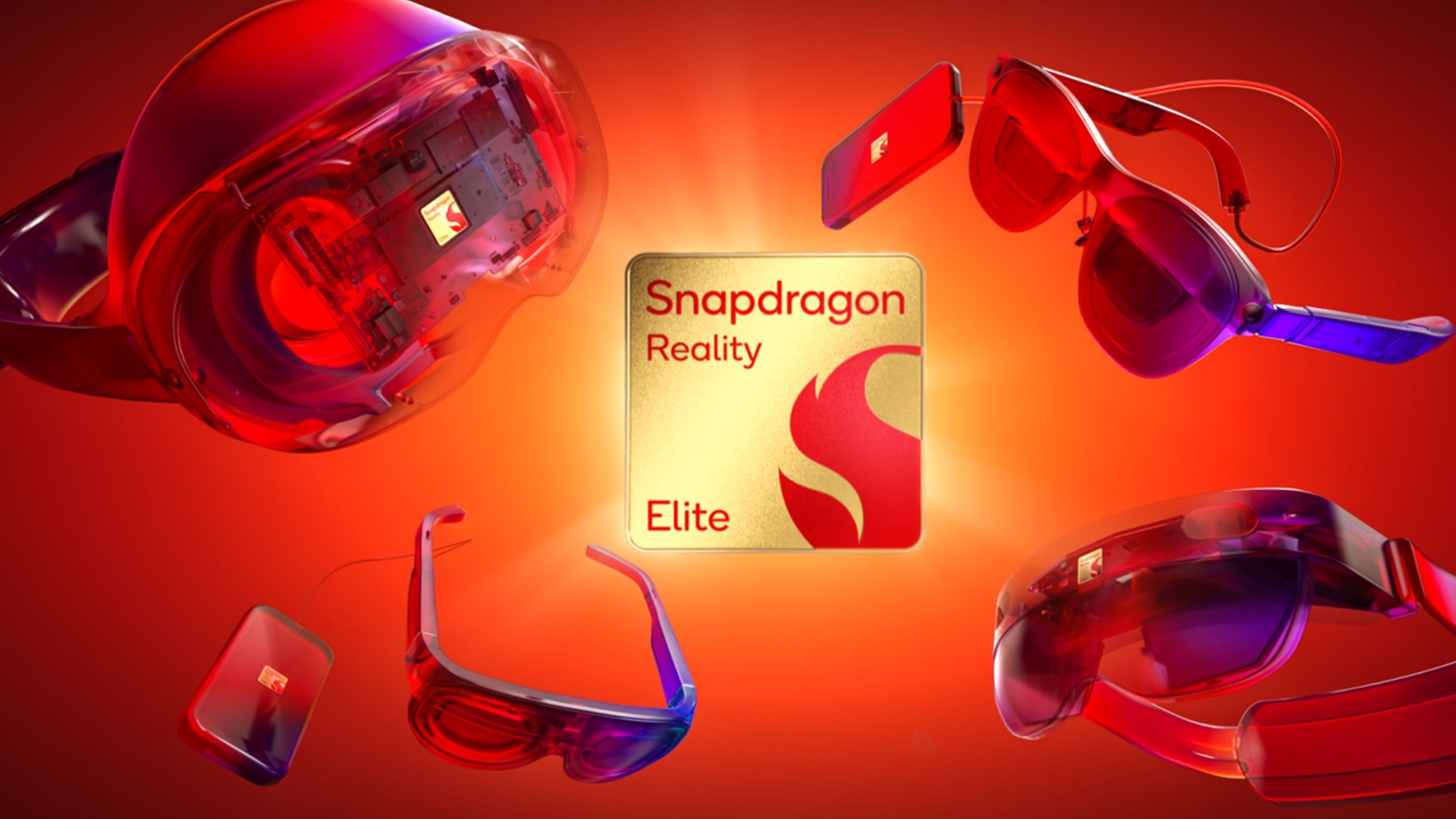
Qualcomm unveiled the Snapdragon Reality Elite at the Augmented World Expo in Long Beach, and it is not a minor refresh. This is the renamed successor to the XR2 Plus Gen 2 chip that powers Samsung's Galaxy XR, but the specs tell a different story. The CPU is up to 30% faster. The GPU is 60% faster. The AI-focused neural processing unit is up to 160% faster. Battery life improves 20%. The chip runs 12 degrees Celsius cooler. It can drive 4.4K resolution per eye with ray tracing at 90Hz. It supports 12 cameras, Wi-Fi 7, and Bluetooth 6. Qualcomm built this thing to shove spatial computing into the AI era, and the first device carrying it is already up for preorder.
That device is Xreal's Project Aura, a pair of glasses that plugs into a phone-sized processor puck with a fan. Unlike all-in-one headsets like Meta Quest 3, Aura splits the compute away from the face. The glasses are light, the puck does the heavy lifting. The chip inside that puck is the Reality Elite, and it runs Google's Android XR operating system with Gemini baked in for real-time AI analysis. Google demonstrated coding directly on the puck. The glasses arrive this fall. You can put down a $99 deposit now and get an extra $100 off whatever the launch price ends up being.

THE CHIP WHO COULD
The Snapdragon XR2 Gen 2 was already solid inside the Meta Quest 3 and the Samsung Galaxy XR. The XR2 Plus Gen 2 upgrade, announced in January 2024, was a step up. This Reality Elite chip is a different league. The 160 percent AI performance boost means the chip can run a large visual model with about 1.7 seconds of latency between when you ask something and when it starts working. On-device AI hits 48 TOPS, enough for small models, though any truly agentic assistant still needs to lean on cloud compute.
Qualcomm is not just selling a faster chip. It redesigned the platform around AI and mixed reality. The photon-to-photon latency, the delay between your hand moving and the screen responding, is 10 percent better. The chip supports hardware-accelerated ray tracing. It can handle 12 cameras on a headset, though glasses like Aura will use far fewer. The connectivity suite, Wi-Fi 7 and Bluetooth 6, means lower latency streaming and better peripheral support.
PROJECT AURA
Xreal's Aura is not a design that would have worked on last year's chip. The puck form factor needs the extra performance headroom and the thermal improvements. The Reality Elite runs cooler, so a fan in a puck the size of a phone can keep up without melting. The tradeoff is a cable between glasses and puck, but the payoff is a pair of glasses that does not look like VR goggles.
Aura runs Android XR, Google's dedicated operating system for extended reality devices, and uses Google's Gemini for AI. Qualcomm is betting that the combination of a powerful chip and Google's AI ecosystem will make these glasses useful for more than just notifications and video playback. The coding demo during the show suggests productivity use cases are in the picture. Still, the experience depends heavily on the puck: the glasses themselves are mostly displays and sensors. All the rendering happens offboard.
WHO ELSE IS USING THIS CHIP
Qualcomm has yearlong agreements with Meta, Google, and Snapchat. Meta's long-expected Quest 4 is likely to pack the Reality Elite. Bytedance's high-end Pico headset, codenamed Project Swan, is expected to use it too. A VR headset maker called Play for Dream is also working on a Reality Elite device, though details are thin. The chip is versatile enough to go into all-in-one headsets like the Quest or disaggregated glasses like Aura.
VR headset sales have dropped since the end of the pandemic. Qualcomm is positioning the Reality Elite to reinvigorate the category by focusing on AI and mixed reality rather than pure VR. The company is also investing in waveguide displays for glasses, which suggests it sees a path to truly lightweight AR that doesn't need a puck. That is years away, but the investment signals intent.
THE GOLDILOCKS PROBLEM
A Qualcomm representative described the challenge as making that sweet-spot Goldilocks product. Meta, Google, and Snapchat all want that product. The Reality Elite gives them a common platform to build on, and the Snapdragon START program offers white-label hardware and software modules so manufacturers can get to market faster. The chip is a whole reinvention with a new target in mind, not just a faster version of what came before.
The 48 TOPS of AI performance on device is not enough for full agentic assistants, but it is enough for real-time translation, object recognition, and contextual overlays. Qualcomm expects cloud AI to handle the heavier lifting, and the Wi-Fi 7 and Bluetooth 6 standards make that handoff fast.
WILL THEY DELIVER? WE THINK SO
The Xreal Aura preorder is the first real-world test of the Reality Elite. If the glasses deliver on the AI promises and the comfort factor, they could set the template for the next generation of wearable AR. If they feel like a developer kit with a nicer finish, the chip will need a better first device. Meta's Quest 4 will be a much larger test, and Qualcomm's yearlong agreement with Meta suggests that device is not far off.

The Reality Elite is here, the software stack is ready, and the first product is for sale. Now it has to actually work in the real world.
what did you make of it?
more from consumer tech
consumer tech
GOOGLE ADDS YOUTUBE MUSIC, INSTACART & CANVA TO AI MODE SEARCH
Starting this week, US users can ask AI Mode to make a playlist, fill a grocery cart, or design a flyer without leaving the search…
consumer tech
THE FLAGSHIP KILLER IS DEAD: ONEPLUS QUITS THE US AND EUROPE
OnePlus is leaving North America and Europe, handing the market to parent Oppo, and pushing remaining devices onto ColorOS.
consumer tech
GOOGLE PIXEL 10 PRO DROPS TO 699, BEST DEAL YET!
A $300 discount on the 128GB model undercuts Prime Day pricing and signals a clear runway to the pixel 11 launch.
consumer tech
APPLE ONE GOES UP $2 A MONTH. THE INDIVIDUAL PLAN IS THE TELL
Family and Premier bundles climb $2 a month with nothing added, while Individual stands still. That gap is the whole story.