US HOME PRICES SEE BIGGEST DROP IN NEARLY A DECADE
Eight months of falling prices and seven months of rising sales: the housing market is not broken, it's rearranged.
by editor5 min readcomments soon
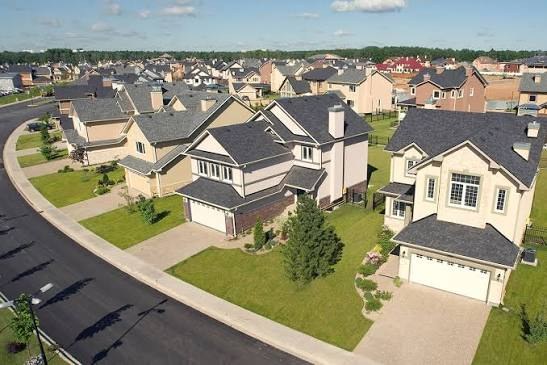
Home prices just posted their biggest year-over-year decline in almost ten years, and the number that catches headlines is real. The average asking price on a new home fell 2.5% between June 2025 and June 2026. The national median list price landed at $430,000, down from the June 2022 peak around $449,000. Prices have fallen eight consecutive months straight.
But here is where the national number starts lying to you. Pending sales rose for the seventh month in a row in June, up 3.7% from a year ago. The same data set shows eight straight months of falling prices and seven straight months of rising pending sales. That is not a contradiction, as Danielle Hale put it: "Eight straight months of falling prices and seven straight months of rising pending sales are not a contradiction". It is a market recalibrating on both sides of the table.



SELLERS LEARNT THEIR LESSON
The old playbook of listing high and cutting later is not working in this market. Sellers are pricing realistically from the start, and buyers are responding with actual offers. "Sellers are reading market conditions and are pricing accordingly from the start rather than listing high and cutting later, and buyers are taking note and making bids". The result is a faster clearing rate despite the price declines. The share of pending sales that collapsed into cancelled contracts in May and April was 6.9%, down from 7.3% a year earlier. As the report puts it, "Homes are going under contract, and they are staying there". Deals are not falling apart at the rate they used to.
June also marked the end of a 26-month stretch where homes sold more slowly than they had a year earlier. The median home sat on the market for 53 days, the same as June 2025, but the trend line has finally flattened after more than two years of deceleration. In the Northeast, homes actually spent two fewer days on the market than they did a year ago, a sign that demand in that region has enough momentum to overcome the broader price adjustment.
THE TWO AMERICAS
The national picture is a compromise between two entirely different housing markets. "The national number hides two opposing trends under the surface". In the West, the median listing price is down 7.3% from a year ago. Meanwhile, the Midwest and Northeast are up 10% and 12.6% respectively compared to June four years ago. Those regions never saw the same speculative run-up, and they have maintained price growth even with interest rates where they are.
Jake Krimmel called this "The two Americas story in housing is now four years in the making" the two Americas story in housing is now four years in the making. What started as a pandemic-era migration pattern has hardened into a structural divide. The Midwest and Northeast have supply constraints that keep prices buoyant regardless of the national interest rate environment.
SUPPLY SUPPLY SUPPLY
The headline number hides a more important fact: the 2.5% annual drop is the largest in nearly a decade, but it is still modest compared with the 4.2% decline from the 2022 peak. Prices are not collapsing; they are normalising from the pandemic frenzy. The regions where supply is tightest (the Northeast, the Midwest) are still seeing price gains because there simply are not enough homes to meet demand. The West had more construction, more investor buying, and now more price exposure.
The eight-month streak of falling prices is notable, but it is not a crash. It is a market working through the hangover of 2020-2022, when median prices jumped by more than 30% in some metros. What the data shows is a market that split not just regionally but behaviorally: sellers that price right get a deal closed quickly, buyers who waited are stepping in, and the cold dinner of 2023-2024 (the 26-month slowdown) is finally thawing.
WHAT THE NUMBERS DON'T TELL US
The pending sales increase is the most telling signal: seven consecutive months of rising signed contracts means the demand side is not dead. Buyers have adjusted to higher rates. The 6.9% cancellation rate, down from 7.3% a year ago, supports that. The bids that are made are sticking.
But the two Americas narrative matters because it determines whether the national price decline is a leading indicator of a broader correction or just a regional averaging effect. If the West continues to slide while the Northeast and Midwest hold (or rise), the national number will keep looking soft even as half the country experiences a decent market. The 10% and 12.6% gains in the Midwest and Northeast over four years are not trivial; they represent actual wealth building in those regions.
The takeaway is not that the housing market is in trouble. It is that the housing market is no longer one market. The last four years have etched a permanent divide between regions that can build and regions that cannot, between places where buyers still compete and places where they finally have leverage. The national price drop is the average of those two realities, not the truth of either.



For now, sellers in the West should price to sell. Sellers in the Northeast might still get multiple offers. And everyone else lives in the gap between the two numbers.
what did you make of it?
more from business
business
APPLE RECLAIMS WORLD MOST VALUABLE COMPANY TITLE, NVIDIA BOTTLES IT
apple overtook nvidia during friday trading, extending a 23% year‑to‑date surge as investors reward its ai agenda and light capital spending.
business
RYAN COHEN'S GAMESTOP PIVOT: GAMES ARE 18% OF REVENUE AND FALLING
GTA6 goes digital-only, Sony ends physical discs, and GameStop's CEO says that's fine because the company now sells toys.
business
NOTEBOOKLM NOW GEMINI NOTEBOOK, ADDS CLOUD CODE EXECUTION
The research tool originally known as Project Tailwind drops the LM and gains a secure cloud computer for data analysis.
business
TSMC FACES ITS HARDEST QUARTER YET AS AI DEMAND MEETS MARGIN SQUEEZE
Record revenue and eps gains aren't the whole story. the costs of building the world's most advanced chip factories are starting to show.