WANT YOUR HOUSE CLEANED FOR FREE? LET A ROBOT TRAIN ON IT.
A German AI lab’s startup has a simple trade: clean floors now, let a camera record everything, and license the footage to build robot maids.
by editor5 min readcomments soon
Shift, an AI training startup, is turning that bargain into a business model. The company gives out free housecleaning services. In return, the cleaner wears a camera headset that records the entire job. That footage is then licensed to developers making AI-powered household robots.
The startup is owned by MicroAGI, a German data research lab founded in 2025. Shift began by hiring contractors to don its camera caps and record their own household chores to build a baseline dataset. Now the company has expanded into a consumer-facing operation, offering no-cost cleaning to customers who consent to the data collection. The program has been running for months across the US, Germany, Turkey, and other European countries.
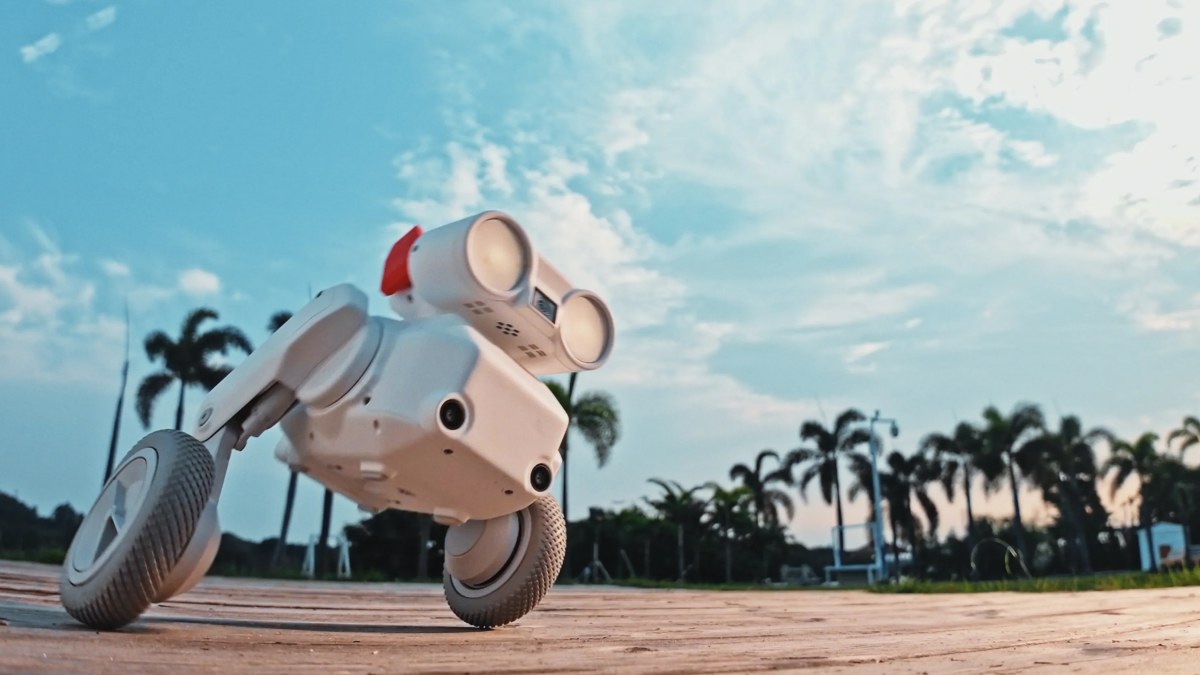


Shift does not build the robots itself. It acts as a data broker for the robotics industry. The video captured by the cleaner’s headset gets labelled and sold to companies that need real-world examples of household navigation, object manipulation, and task completion. In exchange, the customer gets a clean home and the uneasy knowledge that a stranger’s head-mounted camera saw every corner of it.
HOW THE TRADE WORKS
The pitch is straightforward. A customer books a cleaning. A Shift contractor shows up with a standard cleaning kit plus a headset that has a discreet camera pointed forward. The cleaner works through the home, and the camera captures everything the cleaner sees. The customer has signed a data-use agreement, typically bundled with the booking form, that grants Shift the right to license the footage for AI training purposes.
Shift covers the full cost of the cleaning from its own budget. That cost is effectively its customer acquisition expense for a high-value data point. A single cleaning session can yield hours of continuous, high-resolution video of a real home environment: cabinets opened, clutter moved, spills wiped, vacuums manoeuvred around furniture. For a robotics company training a robot to fold laundry or wipe a counter, that video is far more valuable than staged lab footage.
THE DATA PIPELINE
Once the cleaning is done, the footage is uploaded to Shift’s backend, where it is trimmed, anonymised (faces and identifying details blurred, according to the company’s public statements), and annotated. Objects, surfaces, and actions are tagged: this is a stove, this is a spill being wiped, this is a vacuum navigating a rug. The annotated clips are bundled into datasets and licensed to robot manufacturers and AI labs.
Shift’s advantage over synthetic data or lab recordings is ecological validity. The footage captures real human homes with their unpredictable layouts, pet hair, half-open drawers, and out-of-place objects. Training on this kind of data is the only way to make a household robot robust enough to handle the chaos of an actual living room. Shift’s contractors are, in effect, paid annotators who also produce the raw video in the same pass.
WHO OWNS THE DATA
The data-use agreement gives Shift the right to license the footage for AI training. Customers consent at booking. Shift then sells the cleaned datasets to robot makers. It is a straightforward data-for-service swap.
That arrangement is the entire business model. Shift absorbs the cleaning cost and the overhead of annotation, then repackages the footage as a valuable training resource. The risk to customers is that the blurring and anonymisation relies on internal processes, and the camera records not just tasks but the state of the home: what electronics are on the counter, what security system is in the hallway, what medication bottles are on the bedside table. The promise of anonymisation is only as good as the pipeline that implements it.
WHAT COULD POSSIBLY GO WRONG
The most obvious failure is a data leak, whether through a contractor who keeps a copy, a server breach, or a dataset that slips into the open. Re-identification of blurred subjects is increasingly feasible with machine learning tools trained on facial geometry. The fact that Shift blurs faces does not guarantee they cannot be unblurred later with enough computational horsepower.
There is also the consent question. A customer may consent, but family members, roommates, and guests in the home during the cleaning have not signed any agreement. Their faces and activities are recorded as part of the same dataset, with no recourse. Shift’s public materials suggest the camera is directed at the cleaner's field of view, which means it will capture anyone who enters that field.
THE BIGGER PICTURE
Shift is not the first company to pay for training data with a free service. Navigation apps traded turn-by-turn directions for location data. Social networks traded photo storage for behavioural profiles. The home cleaning trade is the same model applied to physical space, which comes with a higher privacy price tag.
What makes Shift notable is that it is explicitly building the substrate for home robots that will one day replace the very cleaners collecting the data. The contractors filming the homes are training the machines that could put them out of work. That irony is not lost on anyone paying attention, though Shift is not obliged to reckon with it.


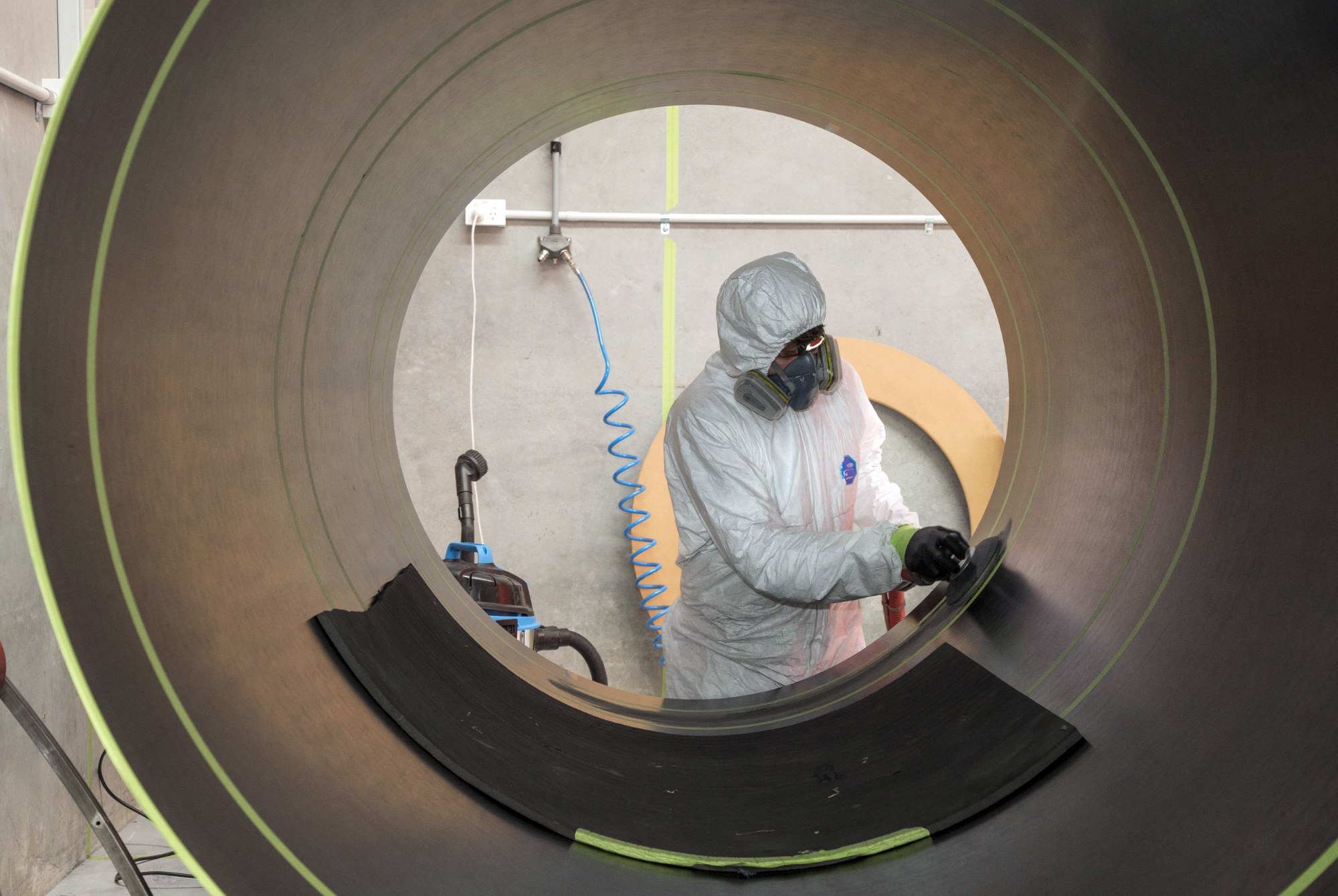
For now, the program runs. Customers get clean floors. Shift gets video. Robot companies get training data. The bargain is clear on paper, and whether it holds up in practice depends on how well Shift guards the tapes and how comfortable the public is with a camera in the cleaning bucket.
what did you make of it?
more from ai
ai
TSMC ADDS $100 BILLION TO ARIZONA CHIP BET, TOTAL HITS $265 BILLION
The additional investment will build at least four more 2nm fabs and advanced packaging, bringing the company's total US commitment to $265 billion.
ai
META WILL ALERT PARENTS IF TEENS DISCUSS SUICIDE WITH META AI
The opt-in feature flags self-harm references in chatbot conversations, with human review before any notification is sent.
ai
ROBLOX'S "BUILD" LETS ANYONE MAKE A GAME FROM THEIR PHONE WITH AI
The new toolset, launching July 28, turns text prompts into playable experiences and puts game creation on iPhone and iPad.
ai
ZOOX REALLS ENTURE ROBOTAXI FLEET OVER SMOKE DETECTION FAILURE
A robotaxi drove into an active fire scene obscured by smoke. NHTSA called emergency scenes not edge cases.