BEZOS: AI PESSIMISTS ARE DEAD WRONG
The Amazon founder argues AI will raise productivity and elevate workers, even as his own company cuts thousands of roles.
by editor5 min readcomments soon
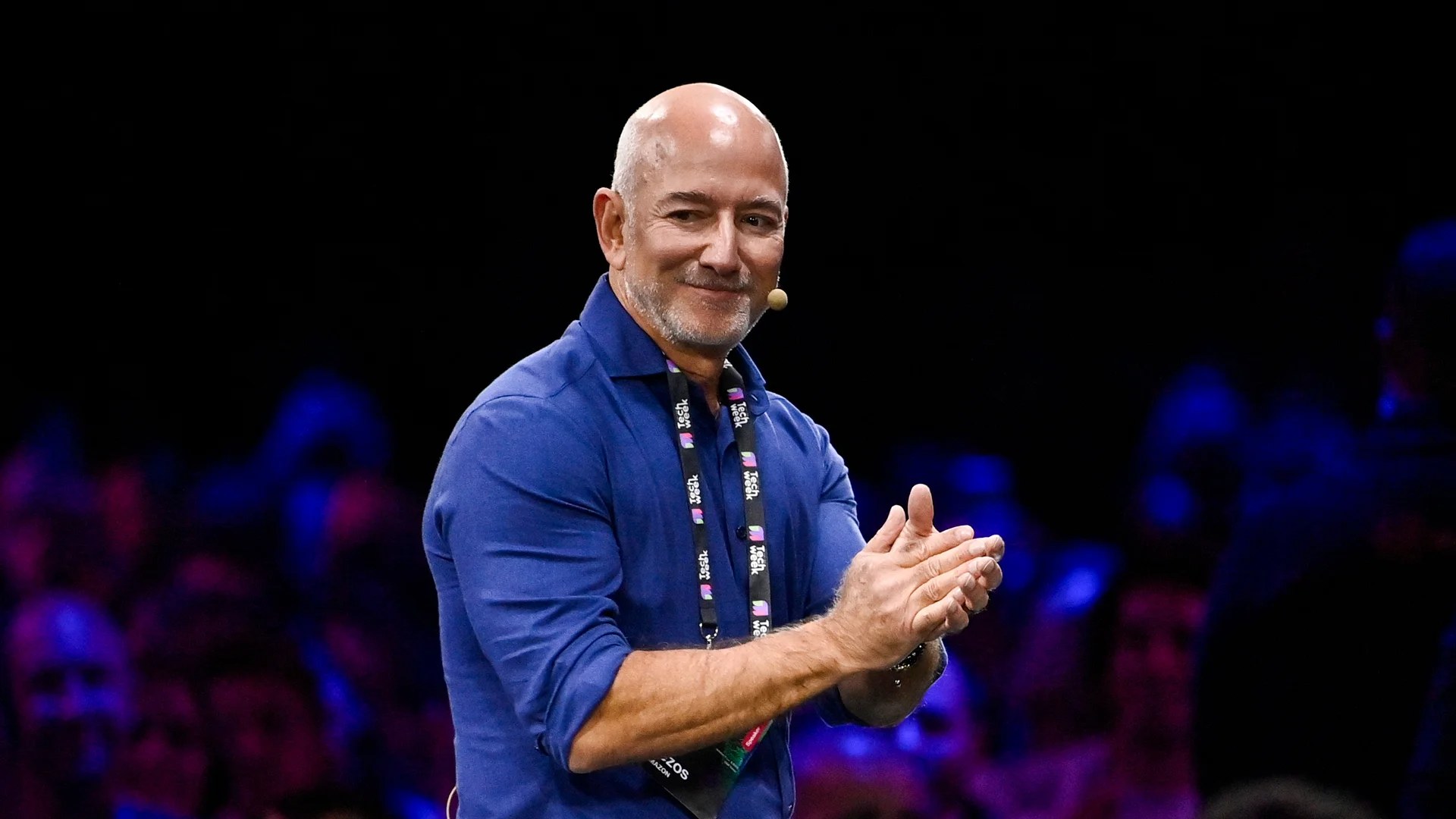
Jeff Bezos is tired of the AI doomer narrative.
The former richest man in the world has a very different prediction: AI will create a shortage of human workers, not a surplus of unemployed ones. "I have a very different view. I think what’s actually going to happen is we’re going to have labor scarcity as a result. People are going to have to work hard." he said in a recent interview.
The argument is simple. AI boosts productivity, which raises the standard of living and increases demand for human labor. Bezos called the pessimists "dead wrong" and said AI will "elevate" young workers to get their work done at "a higher level". "I know there’s a lot of concern in general about AI and job loss" he acknowledged, but "I know why people are pessimistic. They’re pessimistic because a bunch of smart people are telling them to be pessimistic, but those people are wrong"
It is a bold stance at a moment when public anxiety is high. A Reuters/Ipsos survey of 4,531 adults found that 53 percent of respondents worry that they or someone in their household will lose a job to AI. The fear is grounded in real-world numbers, too.
THE BEZOS THESIS
Bezos frames AI as an engine of labor demand, not destruction. He argues that productivity gains historically create new kinds of work rather than eliminating the need for workers. "When you have productivity—and this could be very significant productivity in the economy—that is going to raise the standard of living." The logic is that more efficient economies grow faster, generate more revenue, and hire more people to handle the expanded scale.
It is a classical supply-side optimism applied to the most disruptive technology since the internet. Bezos is essentially betting that the Luddite fallacy will hold again, that every wave of automation has created more jobs than it destroyed, and AI will be no different.
But not everyone in the CEO club agrees, and some of the dissenting voices come from people building the same technology.
PROMETHEUS AND THE INVENTION ARGUMENT
Bezos has a direct financial interest in AI. He is a lead investor in Prometheus, an AI startup that officially launched in November with $6.2 billion in funding and later raised an additional $12 billion at a $41 billion valuation, with backers including JPMorgan Chase, Goldman Sachs, BlackRock, DST Global, and Arch Venture Partners.
Prometheus builds AI tools designed to speed up engineering work. Vik Bajaj agreed with Bezos during the same interview. "Companies occasionally create jobs, but what really creates jobs is invention" he said, connecting the thesis directly to Prometheus. "Inventions are based on dreams, but invention means that you actually make the dream a reality" Bajaj predicted that the result will be more engineers and more jobs in engineering and manufacturing. "We will have more engineers; we will have more jobs in engineering and manufacturing as a result of inventing more"
The feedback loop is convenient for investors: AI makes engineers more productive, which creates more engineering demand, which requires more engineers, which drives more value for the companies that build the tools. The circular logic is elegant. Whether it holds at scale is an open question.
AND THE COUNTERARGUMENTS
Sam Altman, CEO of OpenAI, previously warned that AI would make jobs disappear. He recently walked that back, saying he was wrong about his timeline and prediction. But other tech leaders are less equivocal. Dario Amodei, CEO of Anthropic, has said AI could wipe out 50 percent of entry-level white-collar jobs. That is a very different vision from Bezos's labor scarcity.
Jensen Huang, CEO of Nvidia, has a third take. He called AI a "lazy" excuse for layoffs, suggesting that companies are using the technology as cover for cost-cutting decisions they would have made anyway. Huang's view sidesteps the question of whether AI actually eliminates roles and instead points a finger at management choices.
The division among CEOs reflects the uncertainty. There is no consensus on how the technology will play out in the labor market, only a shared sense that the change is coming fast.
AMAZON CONTRADICTION
Bezos's optimism sits uncomfortably next to Amazon's recent headcount reductions. Amazon has cut thousands of roles as it embraces AI and aims to reduce middle management layers. In October, the company laid off 14,000 corporate workers. In January, it cut another 16,000 roles. That is 30,000 jobs eliminated in the span of four months, at Amazon.
Bezos would likely argue that those cuts are about efficiency, not AI replacing workers. But the timing is awkward. If AI is supposed to create a labor shortage, Amazon is not acting like it. The company is shedding workers, not scrambling to find them.
The counterargument from Bezos's camp would be that the cuts are about organizational structure and that the remaining workers will be more productive with AI tools. The net effect, they would say, is a leaner company that grows faster and eventually hires more. That is the theory. The reality, for the 30,000 people who lost their jobs, is a different story.
THE NUMBERS
The only thing everyone seems to agree on is that AI is changing work. Whether it is changing work for the best is still up for debate. Bezos has placed a very public bet that it will be a net positive. His investment in Prometheus is a hedge, a product, and a statement of belief all at once.
The survey suggests the public is not convinced. 53 percent of Americans are worried about AI taking their jobs. That is a majority, and it is not a margin that gets erased by a single optimistic interview.
Bezos's prediction will be tested in real time. Prometheus needs to deliver on its engineering productivity promise. Amazon needs to show that its efficiency cuts lead to growth rather than stagnation. The other CEOs need to figure out whether they believe Amodei's 50 percent collapse or Bezos's labor scarcity.
what did you make of it?
more from ai
ai
TSMC ADDS $100 BILLION TO ARIZONA CHIP BET, TOTAL HITS $265 BILLION
The additional investment will build at least four more 2nm fabs and advanced packaging, bringing the company's total US commitment to $265 billion.
ai
META WILL ALERT PARENTS IF TEENS DISCUSS SUICIDE WITH META AI
The opt-in feature flags self-harm references in chatbot conversations, with human review before any notification is sent.
ai
ROBLOX'S "BUILD" LETS ANYONE MAKE A GAME FROM THEIR PHONE WITH AI
The new toolset, launching July 28, turns text prompts into playable experiences and puts game creation on iPhone and iPad.
ai
ZOOX REALLS ENTURE ROBOTAXI FLEET OVER SMOKE DETECTION FAILURE
A robotaxi drove into an active fire scene obscured by smoke. NHTSA called emergency scenes not edge cases.