SUPREME COURT GIVRS TRUMP POWER TO FIRE FTC
In a 6-3 ruling, the justices overturned a 1935 precedent and handed the president direct control over independent agencies.
by editor5 min readcomments soon
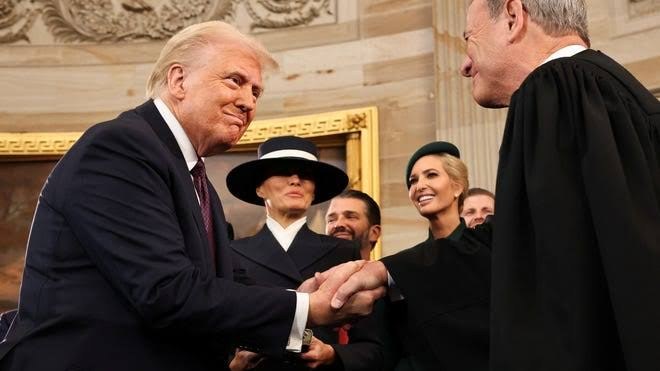
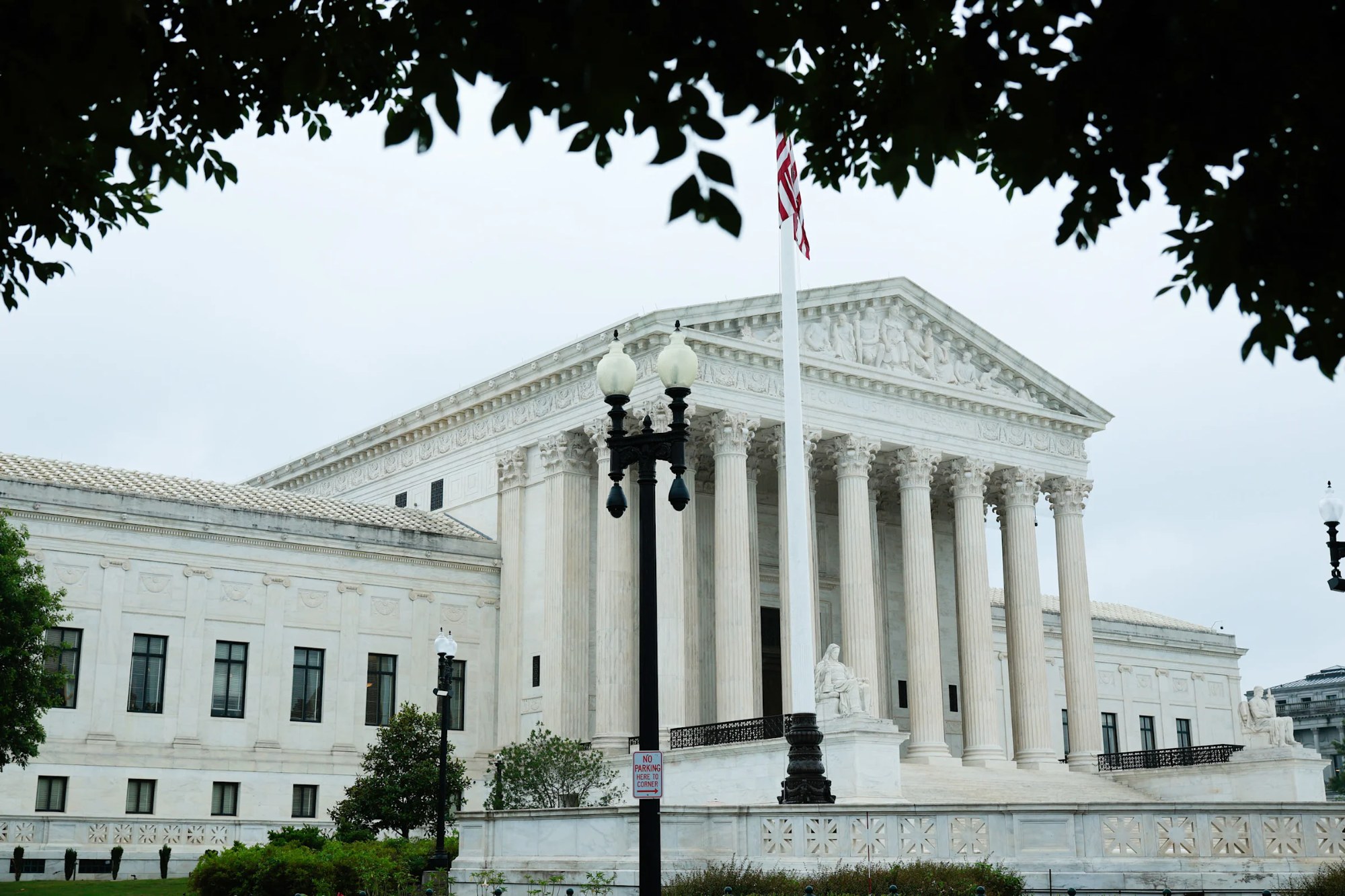
The Supreme Court ruled Monday that the president can fire commissioners of the Federal Trade Commission at will, overturning a 1935 precedent that had protected the independence of regulatory agencies for nearly a century. The 6-3 decision in *Trump v. Slaughter* embraces the unitary executive theory and clears the way for the White House to directly control agencies that Congress deliberately designed to be insulated from politics.
Chief Justice John Roberts wrote for the majority that subordinates who exercise the president's power must be removable by him. "Subordinates who exercise the President’s power are subject to removal by him. Then, and only then, can they remain accountable to the President, and the President to the people." The opinion explicitly overruled *Humphrey's Executor*, the 1935 case that had allowed Congress to impose removal protections on multi-member commissions. That framework applied to the FTC, FCC, SEC, NLRB, and a dozen other agencies. It is now dead.
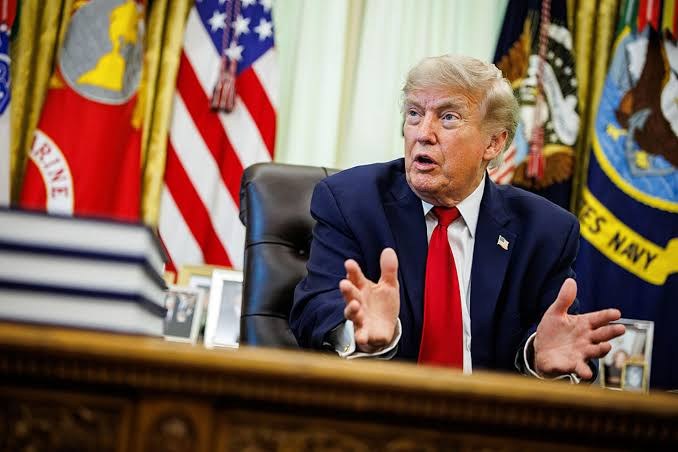

The immediate target of the case was the FTC. The Trump administration fired Democratic commissioners Rebecca Kelly Slaughter and Alvaro Bedoya in 2025, and the pair sued, arguing that the FTC Act's removal protections made the firings illegal. The justices sided with the president.
WHAT THE RULING ACTUALLY MEANS
The wording matters. The ruling did not just bless the Firings of Slaughter and Bedoya. It declared that the entire class of agencies with for-cause removal protections is unconstitutional. Any commissioner of any multi-member agency that Congress shielded from at-will presidential removal is now fireable on the president's say-so. The majority found that *Humphrey's Executor* "has not withstood the test of time" and had to go.
President Trump celebrated on Truth Social, calling it a win that "90 years of precedent has been COMPLETELY AND UNEQUIVOCALLY OVERRULED, greatly increasing Presidential Power at a time when it is most needed!"
The dissent, from Justice Sonia Sotomayor joined by the Court's two other liberals, did not mince words. The ruling, Sotomayor wrote, gives the president — power that "The result is a President who emerges with far greater power than ever before. It is a power, however, that neither the People, nor Congress, nor the Constitution bestowed upon him. In granting the President this unbridled authority, the Court upends its precedent, misconstrues our history, and sheds any pretence of judicial modesty."
THE FED GETS A DIFFERENT OUTCOME
In a second ruling the same day, the Court split 5-4 to block the firings of Federal Reserve Board member Lisa Cook for now. The Fed operates differently from the FTC: its independence is more directly tied to monetary policy, and the Court hinted in the *Slaughter* opinion that agencies like the Fed might fall under a different removal framework. The distinction matters because it draws a boundary around the unitary executive theory. The president can fire the people who enforce consumer protection and antitrust law, but apparently not the people who set interest rates. That line will be tested in future cases.
WHAT ACTUALLY CHANGES TODAY
In practice, not much immediately. Slaughter and Bedoya have mostly been out of their jobs for months while the case wound through the courts. Bedoya formally resigned to take other work. Slaughter kept fighting, but the legal battle is now over. Republican FTC chair Andrew Ferguson has already positioned the agency as a direct arm of the White House, calling it the and instructing staff to stop describing the FTC as independent in legal filings.
The longer-term shift is structural. The ruling applies not just to the FTC but to the FCC, the FEC, the NLRB, the NTSB, and any other agency whose commissioners previously enjoyed for-cause removal. Those agencies now report directly to the president. The White House could overturn their rulemakings, enforcement priorities, and even individual case decisions at any time, since the commissioners serve at the president's pleasure. This is a fundamental rewriting of how federal regulation works.
THE 90-YEAR HOLE
*Humphrey's Executor* was a New Deal-era case that upheld President Franklin Roosevelt's firing of FTC Commissioner William Humphrey. The Court at the time said the FTC was a quasi-legislative, quasi-judicial body and therefore the president could not remove commissioners just for policy disagreements. That compromise allowed a sprawling administrative state with bipartisan commissions. Now it is replaced by a simple principle: the president controls every executive-branch employee, and any agency with a policy role is part of the executive branch.
The irony is that the *Slaughter* ruling may actually make it harder for future presidents to maintain policy consistency across administrations. Independent agencies were supposed to provide continuity through changing administrations. Now every new president can purge the previous administration's appointees from every regulatory agency on day one. That speed of change may produce whiplash for industries regulated by multiple agencies, from telecom to banking to labour law.
THE MORE LIKELY PATH
Congress could theoretically recreate independent agencies by statute, using language that passes constitutional muster under the new standard. The Court left open the possibility that some agency structures could survive if the president retains broader removal powers. But the burden is now on Congress to write around the ruling, and there is little appetite in a polarised legislature to revisit the architecture of the administrative state.
The more likely path is a series of challenges to other removal protections — at the SEC, the Consumer Financial Protection Bureau, the Federal Housing Finance Agency — citing *Slaughter* as new precedent. The ruling does not directly overturn those cases, but it provides a roadmap. The CFPB, in particular, has been a frequent target of unitary executive theory advocates, and its structure was upheld by the Court in 2020 on different reasoning that may not survive a fresh challenge.
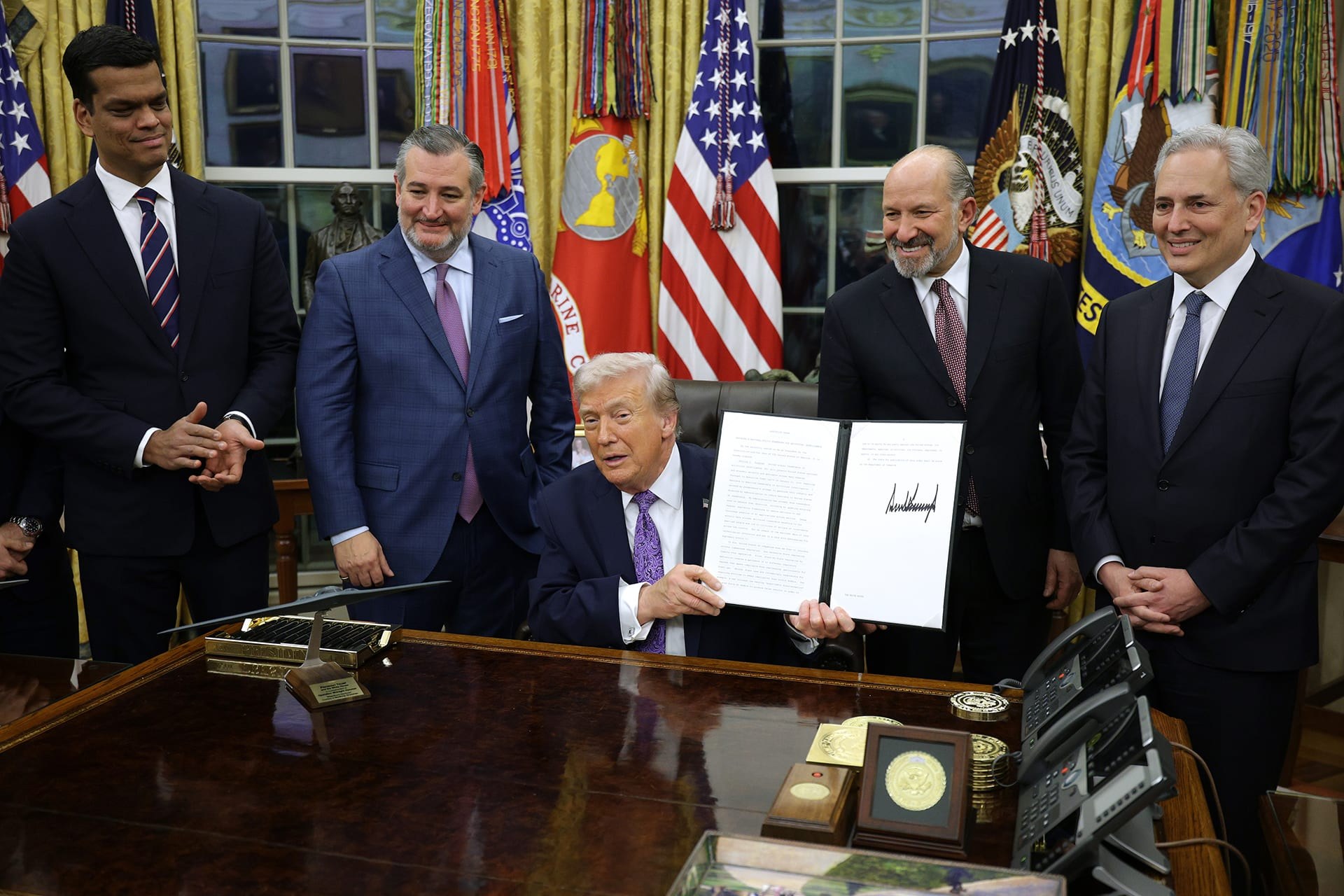


For now, the FTC's Democratic commissioners are gone for good, and every commissioner in Washington who disagrees with the president knows they could be next. That changes the culture of regulation in a way that will take years to fully measure.
what did you make of it?
more from business
business
APPLE RECLAIMS WORLD MOST VALUABLE COMPANY TITLE, NVIDIA BOTTLES IT
apple overtook nvidia during friday trading, extending a 23% year‑to‑date surge as investors reward its ai agenda and light capital spending.
business
RYAN COHEN'S GAMESTOP PIVOT: GAMES ARE 18% OF REVENUE AND FALLING
GTA6 goes digital-only, Sony ends physical discs, and GameStop's CEO says that's fine because the company now sells toys.
business
NOTEBOOKLM NOW GEMINI NOTEBOOK, ADDS CLOUD CODE EXECUTION
The research tool originally known as Project Tailwind drops the LM and gains a secure cloud computer for data analysis.
business
TSMC FACES ITS HARDEST QUARTER YET AS AI DEMAND MEETS MARGIN SQUEEZE
Record revenue and eps gains aren't the whole story. the costs of building the world's most advanced chip factories are starting to show.