SUPREME COURT LIMITS GEOFENCE WARRANTS
The court said an individual has a reasonable expectation of privacy in their cell-phone location information, striking down a key police tactic.
by editor4 min readcomments soon
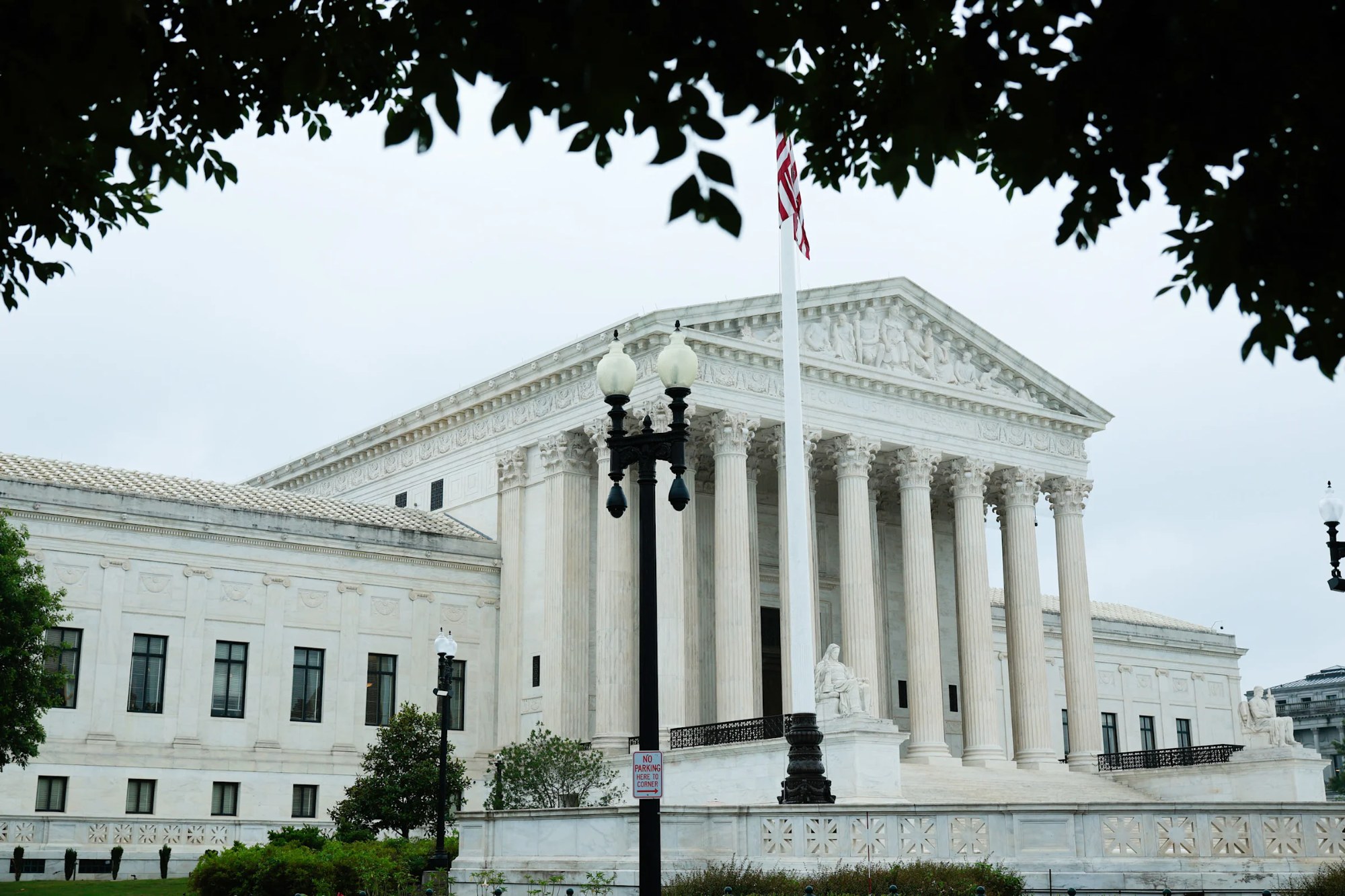
The US Supreme Court ruled that law enforcement can no longer use a geofence warrant to force companies like Google to hand over the location data of everyone who happened to be near a crime scene. The 6-3 decision says the tactic violates the Fourth Amendment's protection against unreasonable searches, and that the police need a real search warrant based on probable cause instead.
The ruling had been brewing for years as prosecutors and defence attorneys wrestled over whether a warrant that names no individual but only a digital perimeter squares with constitutional privacy. The court's answer is no. "An individual has a reasonable expectation of privacy in his cell-phone location information." The language is broad enough to reshape how police investigate violent crimes, but also to limit a surveillance method that swept up the movements of innocent people by the millions.


THE CASE THAT FORCED THE ISSUE
The facts read like a cautionary tale about the limits of digital dragnets. A man stole $195,000 from a bank in Virginia. The case went cold. Detectives eventually served Google with a geofence warrant that demanded location data for any phone that had been near the bank in the hour before and after the robbery. Google replied with the anonymised data of 19 people whose devices had been in the zone. After the police narrowed the list, Google handed over the identifying information of three of them. One was Okello Chatrie, who later confessed and was convicted.
Chatrie's attorneys argued that the geofence search amounted to "search first and develop suspicions later" because it compelled Google to sift through the location history of millions of users before the police had any specific suspect in mind. The government countered that location data is not protected because people "choose" to share it by failing to disable system-wide geotracking services and background app permissions. The court rejected that argument.
THERE ARE CAVEATS
The ruling does not ban all location data requests. It requires that law enforcement obtain a traditional search warrant, which demands probable cause that a specific person committed a specific crime, before a tech company can be compelled to disclose historical location information tied to an identifiable device or account. Geofence warrants, by contrast, start with a location and only later try to identify who was there. That reverse logic is what the court found unconstitutional.
For Google, Apple, and any company that stores location data, the practical effect is immediate. They will no longer be able to process a geofence warrant as a standard request. Instead, police will have to name a suspect and get a warrant supported by probable cause. The burden shifts from the company acting as a passive data reservoir to the state making a specific showing of need.
BIG PRIVACY WIN
The court's reasoning centres on what a person reasonably expects when they carry a phone. Almost everyone does. The device pings nearby cell towers, GPS satellites, Wi-Fi access points, and Bluetooth beacons, constantly generating a trail that reveals where someone lives, works, prays, sleeps, visits a doctor, or meets a lover. The majority held that handing that entire trail over to the police, without any individualised suspicion, is a search the founders would have recognised as unreasonable.
The government argued that people forfeit privacy by failing to disable location services. The court essentially said that constitutional rights cannot be waived by clicking through a privacy policy that few people read and even fewer fully understand. That is a significant statement about the relationship between consumer technology and the Fourth Amendment.
WHAT THIS MEANS FOR LAW ENFORCEMENT
Police departments that have come to rely on geofence warrants will have to go back to older investigative methods: witness interviews, surveillance footage, and physical evidence. For cold cases that depended entirely on a geofence sweep to generate leads, the ruling may close off one of the few remaining avenues. But the court also left room for exigent circumstances, meaning if there is an immediate threat to life, officers can still act quickly without a full warrant.


THE CHATRIE QUESTION!
Okello Chatrie confessed and is serving time for the bank robbery. The ruling is not expected to change his sentence. His conviction was based on his own statement, not on the geofence data itself, though the data was used to identify him. That distinction means he cannot retroactively challenge the warrant that led to his identification. But the ruling makes clear that in future cases, evidence obtained through a geofence warrant is likely inadmissible unless it can be shown that the warrant met the probable cause standard the court now requires.
what did you make of it?
more from consumer tech
consumer tech
GOOGLE ADDS YOUTUBE MUSIC, INSTACART & CANVA TO AI MODE SEARCH
Starting this week, US users can ask AI Mode to make a playlist, fill a grocery cart, or design a flyer without leaving the search…
consumer tech
ONEPLUS DEAD IN THE WEST, OPPO OVERLORDS PULL PLUG
The brand that built its reputation on has settled for leaving its biggest markets. Existing phones still work. New ones won't come.
consumer tech
GOOGLE PIXEL 10 PRO DROPS TO 699, BEST DEAL YET!
A $300 discount on the 128GB model undercuts Prime Day pricing and signals a clear runway to the pixel 11 launch.
consumer tech
APPLE RAISES APPLE ON BUNDLE FOR FAMILY AND PERMIER PLANS
the Family plan jumps $2 to $27.95 a month and the Premier to $39.95; Apple hasn’t explained the bundle increase beyond citing music licensing for…