TRUMP SIGN'S AI SECURITY ORDER
The June 2 executive order gives developers a 30-day window to share with the government before release, but explicitly rules out mandatory preclearance. It echoes Anthropic's own Project Glasswing initiative.
by editor3 min readcomments soon
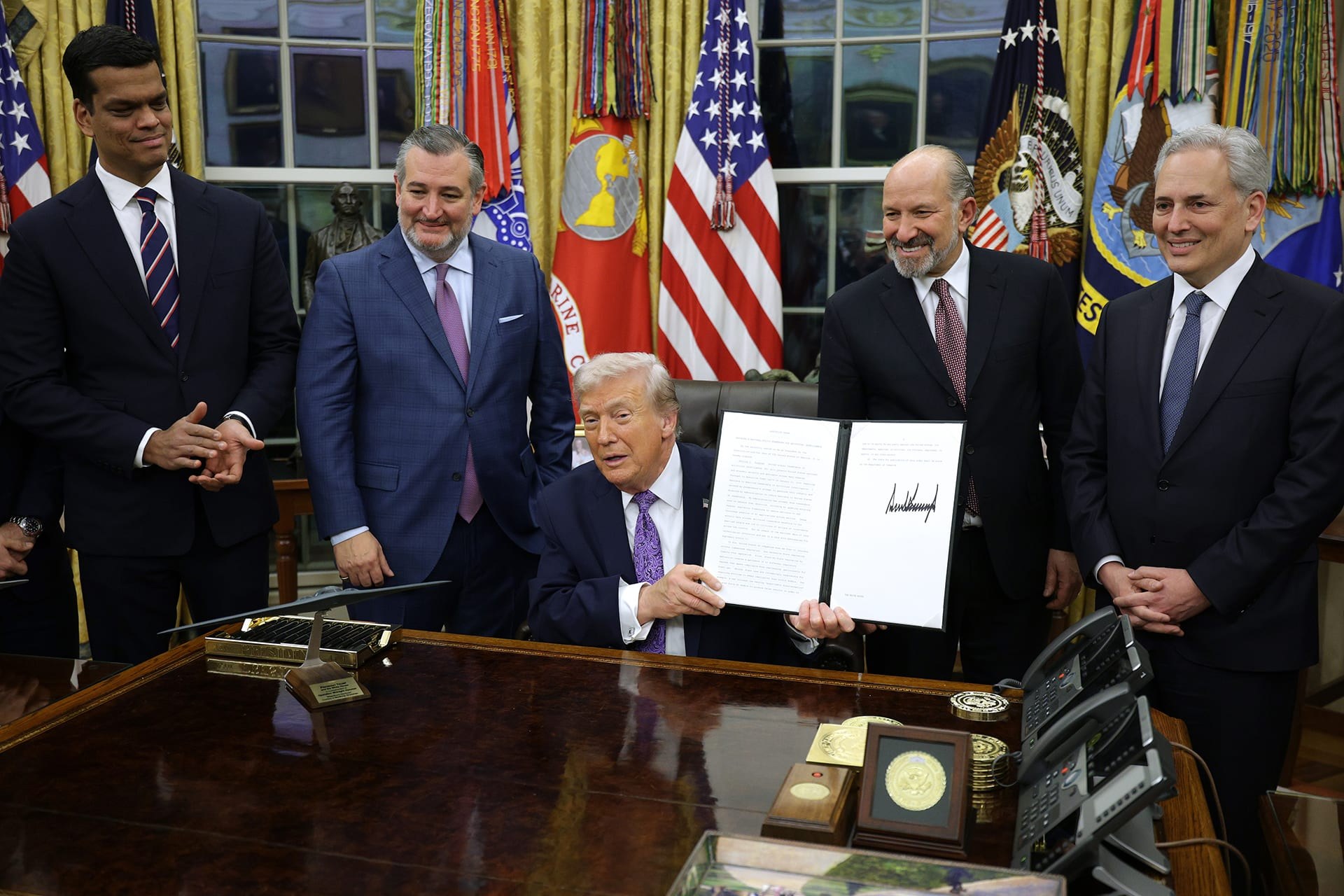
President Donald Trump signed an executive order on June 2 inviting the developers of the most powerful AI models to hand their systems to the US government for cybersecurity review before public release. The invitation is explicit: submit, but do not be compelled to.
The order directs the NSA, CISA, and NIST to design a process through which developers could give the government access to a for up to 30 days before releasing it to other trusted partners. A separate clause expressly rules out any mandatory licensing or preclearance requirement for new models. The tension between the two positions is not subtle.


This move marks a shift for an administration that has consistently favored a light touch on AI. Trump pulled an earlier draft of the order in May, citing concerns that included its longer review window. The version that landed on June 2 is shorter, narrower, and explicitly voluntary.
THE MODEL OF CONCERN
The order lands amid mounting concern over frontier models that can find and exploit software flaws at scale. Anthropic's Claude Mythos Preview is the chief model of concern mentioned in the documents surrounding the order. Anthropic has recently warned that rival labs could field comparable models within one year, possibly without safeguards against misuse.
The framework closely echoes Anthropic's own Project Glasswing, which gives vetted partners early access to Mythos to scan critical software for vulnerabilities. In effect, the government is adopting a model the company already built and offering it as a sector-wide template.
WHAT THE ORDER ACTUALLY DOES
The order gives agencies 30 days to harden national security, military, and civilian federal systems against AI-enabled threats. It directs CISA to issue binding directives that expand AI-enabled defensive tools and widen access for smaller operators such as rural hospitals and local utilities. A new led by the Treasury Department will coordinate vulnerability scanning, validation, and patching across federal systems.
The NSA, CISA, and NIST must now build a classified benchmark to decide which models cross the threshold. That benchmark will determine which systems trigger the optional review window.
THE ACCOUNTABILITY GAP
Diana Kelley, a security executive, noted that voluntary programs only work when they create real accountability. "Voluntary security programs can work, but only when they create real accountability" The order provides no such mechanism. It invites participation but offers no enforcement lever beyond the threat that Congress might later tie pre-release review to procurement or export rules.
Rajeev Gupta, another industry voice, was blunt. "The government simply isn't equipped to meaningfully oversee frontier AI models on its own" He floated a public-private body funded by the labs but backed by regulatory authority as an alternative to government-led oversight.

The framework's force will rest on whether Congress later acts to tie pre-release review to procurement or export rules. Without that legislative backbone, the order is a handshake extended to an industry that has shown no particular hunger for government involvement in its release schedules.
what did you make of it?
more from ai
ai
TSMC ADDS $100 BILLION TO ARIZONA CHIP BET, TOTAL HITS $265 BILLION
The additional investment will build at least four more 2nm fabs and advanced packaging, bringing the company's total US commitment to $265 billion.
ai
META WILL ALERT PARENTS IF TEENS DISCUSS SUICIDE WITH META AI
The opt-in feature flags self-harm references in chatbot conversations, with human review before any notification is sent.
ai
ROBLOX'S "BUILD" LETS ANYONE MAKE A GAME FROM THEIR PHONE WITH AI
The new toolset, launching July 28, turns text prompts into playable experiences and puts game creation on iPhone and iPad.
ai
ZOOX REALLS ENTURE ROBOTAXI FLEET OVER SMOKE DETECTION FAILURE
A robotaxi drove into an active fire scene obscured by smoke. NHTSA called emergency scenes not edge cases.