RIVIAN LAYS OF HUNDREDS A WEEK AFTER R2 DELIVERIES BEGIN
The cuts hit customer-facing teams as the company races to profitability with its cheaper SUV, its fourth such round since 2024.
by editor6 min readcomments soon
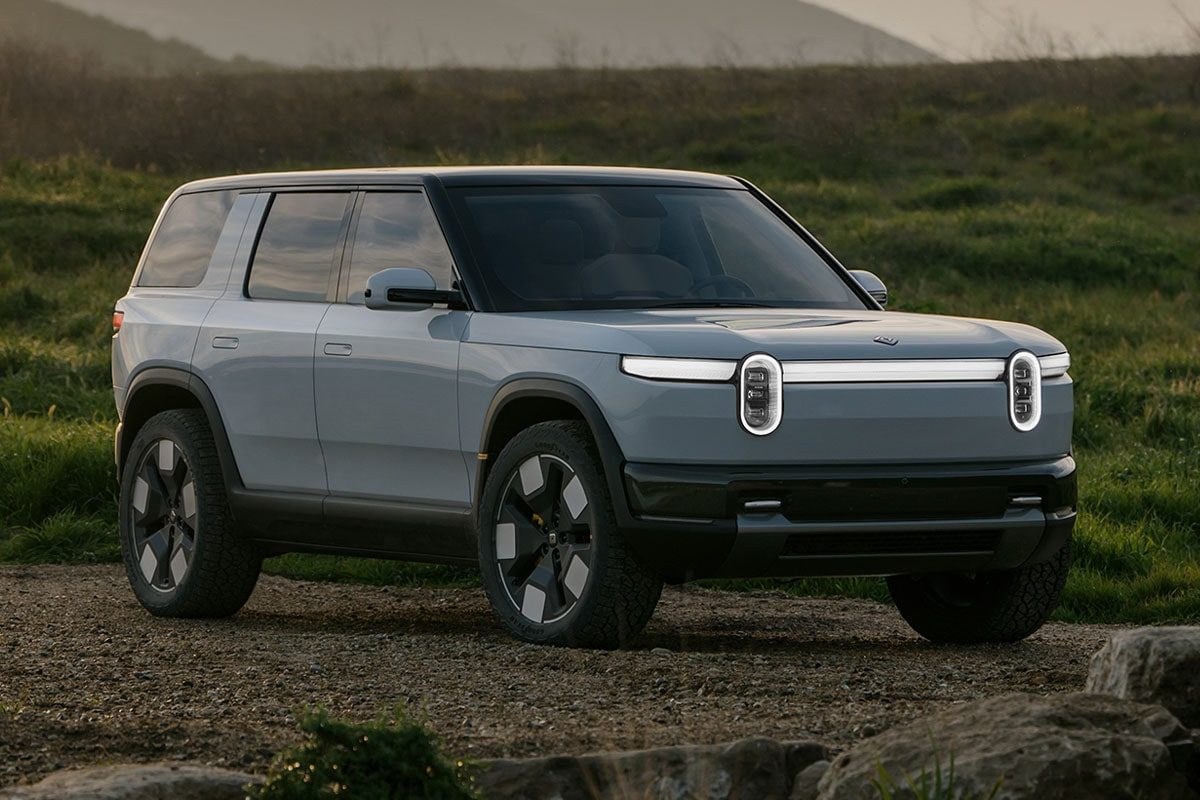
Rivian laid off hundreds of workers this week, less than 2% of a workforce that ended last year at 15,232 employees. The timing is the part that stings: R2 deliveries started exactly one week ago. The R2 is the cheaper, higher-volume SUV that Rivian has bet the entire company on, the vehicle that is supposed to turn a niche premium EV maker burning $3.6 billion a year into a profitable mainstream brand.
The cuts were concentrated in service, sales, and marketing, areas that matter most when you are about to scale customer interactions. Rivian confirmed the layoffs and described them as part of a restructuring: "We recently restructured a handful of teams within Rivian as we work to profitably scale our business," It is at least the fourth round of layoffs since early 2024. In October 2025, the company cut about 600 positions, or roughly 4.5% of its workforce at the time. CEO RJ Scaringe tied those cuts to slowing EV demand after the $7,500 federal tax credit expired under the Trump administration, and to leaning down ahead of the R2 launch.

RIVIAN HAS NEVER TURNED AN ANNUAL PROFIT
Last year it lost $3.6 billion on 42,247 vehicles delivered. In the first quarter of this year the automotive segment was still losing about $6,000 per vehicle. The R2 is the math that is supposed to fix that. The Performance trim with the Launch Package starts at $57,990, Premium at $53,990, a Standard version at $48,490 due in 2027, and a $45,000 base model to follow. At those prices and at scale, the per-vehicle loss narrows or flips positive. But scale only works if the cost structure shrinks along with it.
The layoffs are part of that cost correction. Cutting customer-facing roles rather than production roles suggests Rivian is trying to protect R2 assembly capacity while trimming the overhead that supports vehicles already on the road. It is a classic automaker move: reduce the number of people who touch customers, not the number who touch cars. The risk is that a new, lower-priced vehicle attracts a much larger customer base, and those customers expect service, sales support, and marketing attention that a leaner team may struggle to provide.
WHAT THE CUTS REVEAL
The R2 is the vehicle Rivian's entire financial story rests on. Launching it and immediately slimming the teams that sell and support it is an unusual sequence. It suggests two things. First, that Rivian's cash situation is tight enough that even a single quarter of higher spend on customer operations is unacceptable. Second, that the company believes R2 demand will be strong enough to sell itself, reducing the need for aggressive marketing and sales staffing.
That is a bet worth watching. The R2 enters a different market than the R1T and R1S. Those vehicles competed at $70,000 and above, where buyers expect white-glove treatment and can tolerate a limited service network. The R2 starts at $53,990 for the Premium trim today, with a Standard version at $48,490 due in 2027 and a base model at $45,000 to follow. At that price point, buyers compare Rivian against Tesla, Hyundai, and Ford, and they expect dealer-like convenience, easy service scheduling, and responsive support. Reducing staff in those areas during the launch window could frustrate early R2 owners and slow word-of-mouth adoption.
A PATTER OF CUTS
The October 2025 layoffs of 600 people, about 4.5% of the workforce at the time, were explained by Scaringe as a response to the federal tax credit expiration and a need to get lean before R2 ramp. That was the first major post-credit adjustment. The current round, much smaller in percentage terms, follows the same logic but lands at a more awkward moment. The pattern is cumulative: Rivian has now shed roughly 900 positions between these two rounds, plus whatever smaller rounds occurred earlier in 2024. The total headcount at the end of last year was 15,232, so the net reduction in the past six months alone approaches 6%.
That matters because Rivian is not just cutting fat. The cuts in the October round involved marketing, vehicle operations, and sales/delivery and mobile operations teams. The current round hit service and customer segments, including sales and marketing. The organization is shrinking the functions that connect the company to its customers, not the ones that design and build the vehicles. That is a deliberate choice: Rivian is betting that product excellence will carry the brand through a lean period, and that customer experience can be rebuilt later when cash flow turns positive.
REGULATORY HEADWINDS
The elimination of the $7,500 federal EV tax credit under the Trump administration changed the competitive dynamics for every automaker in the space. For Rivian, the credit had been a significant price lever: it turned a $50,000 R2 into a $42,500 effective price for qualifying buyers. Without it, the R2's price point becomes harder to reach for the cost-conscious buyers who are the target audience for a mass-market SUV. Rivian has said the R2's pricing accounts for the credit's absence, but the margin cushion is thinner as a result.
The layoffs can be read as a direct response to that margin squeeze. Cutting a few hundred customer-facing roles saves tens of millions of dollars annually. That money does not show up on a per-vehicle basis in a dramatic way, but it helps the bottom-line math that investors are watching. Rivian has to show a path to profitability before the next capital raise, and every cost takeout gets it closer.

WHERE DOES RIVIAN GO FROM HERE
Two things. First, whether R2 production ramps smoothly and whether initial delivery quality holds up. The R2 is built at Rivian's Normal, Illinois plant, the same facility that produces the R1 line, and capacity has been a constraint before. Second, how customer satisfaction metrics shift during the first year of R2 ownership. If service wait times lengthen or sales support feels thin, the layoff logic will be tested publicly. For now, Rivian is executing a difficult balance: launch the most important vehicle in company history and simultaneously cut the teams that will have to sell it and keep it on the road. That is a high-stakes gamble, and the next few quarters will reveal whether it was the smart kind or the desperate kind.
what did you make of it?
more from business
business
APPLE RECLAIMS THE CROWN AS NVIDIA'S $5TN REIGN WOBBLES
Apple overtook Nvidia during Friday trading and is closing on $5tn, even as Nvidia nicked the close. The momentum, for now, is Apple's.
business
RYAN COHEN'S GAMESTOP PIVOT: GAMES ARE 18% OF REVENUE AND FALLING
GTA6 goes digital-only, Sony ends physical discs, and GameStop's CEO says that's fine because the company now sells toys.
business
RIP NOTEBOOKLM: THE NAME GOES, THE RESTRAINT STAYS
The research assistant that knows its own limits is now Gemini Notebook. Same tool, same answers, blander name.
business
TSMC'S MONSTER QUARTERS COME WITH A 3% MARGIN SQUEEZE
Q1 revenue is up 35.1% and gross margin sits at 66.2%, but the N2 ramp and the Arizona buildout are coming for the P&L.