BITZERO BUILT DATA CENTRES NOBODY COULD BLOCK AND IT JUST HIT NASDAQ
While $130 billion in AI infrastructure stalled across the US, this company quietly locked up permits, power, and a $2.6 billion lease in Scandinavia.
by editor6 min readcomments soon
Communities across the United States have blocked or delayed more than $130 billion in AI data centres in the first three months of 2026 alone. Google walked away from a $1 billion project outside Indianapolis minutes before the council vote. Tucson voted unanimously against a $3.6 billion Amazon campus. Lawmakers introduced over 300 data centre bills in the first six weeks of the year, and 14 states floated outright moratoriums on new construction.
The message from the ground is not subtle. The AI buildout is hitting a wall of local resistance: noise, water, grid strain, and a growing sense that the benefits flow to shareholders while the costs stay in the neighbourhood.

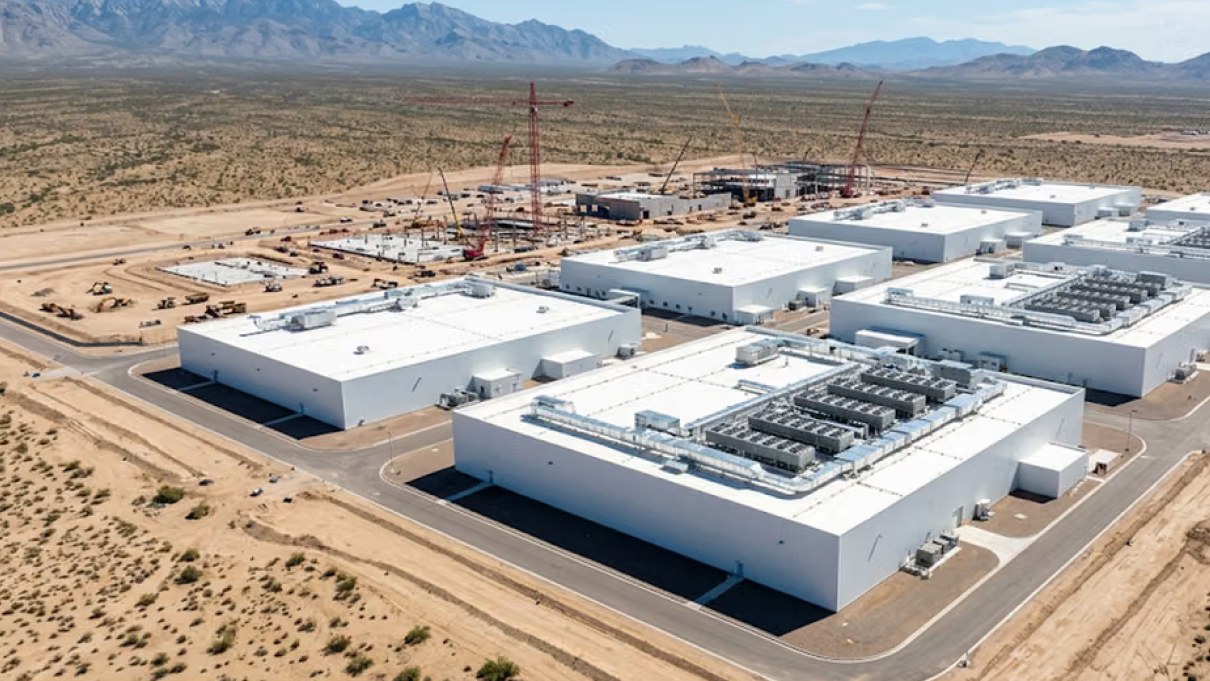

Bitzero, a data centre company that listed on Nasdaq on June 9, sees that wall and built an entire business model around going around it.
APPROVAL-FIRST STRATEGY
Bitzero spent the last four years quietly engineering its way around the problem of centre-enter approvals. As CEO Mohammed Bakhashwain described it, the company locks down power access, grid positioning, and pricing frameworks first, and then builds on top of what it has already secured. The model is not build first, ask later. It is ask, secure, build, then welcome the tenant.
That sequence turned out to be prescient. The company now controls more than a gigawatt of low-cost, clean power capacity across Norway and Finland, permitted before the backlash started and welcomed by the communities around it. While competitors were fighting zoning battles in Arizona and Indiana, Bitzero was quietly getting its grid connection license directly from the Norwegian transmission operator, a status that ordinarily takes years to obtain.
THE ECONOMICS OF LOCKING-IN
Bitzero's flagship site is in central Norway, in the municipality of Namsskogan, where it draws 100% renewable hydroelectric power at 3 to 4 cents per kilowatt-hour. Those are numbers that kill in the data centre business. At that price, the energy input for a megawatt of compute is roughly a third of what it costs in many US markets, and the carbon profile is essentially zero.
In May, Bitzero signed a binding letter with OneQode, a cloud and AI infrastructure provider, to lease the full 110-megawatt initial capacity of the Namsskogan site for 15 years, with room to scale toward 315 megawatts. The lease is worth roughly $2.6 billion over the term. Bitzero expects operations to begin in the first half of 2027.
The financial structure is clean. The tenant will pay for the power on top of the rent. Bitzero already owns the building and the grid connection, so its incremental cost per megawatt is limited to operations and maintenance. The company estimates the site will run at an 85% net operating income margin: around $178 million in annual revenue at full capacity and about $151 million in net operating income.
Kevin O'Leary, the entrepreneur and investor who backed Bitzero, described the company simply: The description fits. Bitzero does not compete on which centre has the fanciest cooling system. It competes on having cheap, clean, permitted power that nobody can shut down.
THE BROADER FIGHT
The resistance in the US is not a minor headwind. It is a structural challenge to the AI buildout. When Applied Digital locked in 15-year leases with CoreWeave for 250 megawatts in North Dakota, the deal put about $7 billion of revenue on the table over the term, roughly $28 million for every megawatt under contract. Those numbers show how much money is at stake, and how much is at risk when a project gets blocked.
In Tucson, the council voted down Project Blue unanimously, citing fears about water use and rising costs. Google's Franklin Township proposal collapsed when the council was set to vote it down. And lawmakers are not stopping at individual projects. Fourteen states have floated outright moratoriums on new dcentrenter construction. The industry is facing its first serious regulatory reckoning, and it is happening in city halls and statehouses, not in Washington.
WHY BITZERO IS POSITIONED WELL
Bitzero's advantage is timing and geography. The company entered Norway before the political window closed. Soon after Bitzero's site in Namsskogan won approval, Norway capped new centre permits at five megawatts each, effectively preventing any competitor from building a similar-scale facility. Bitzero holds its own transmission license, a regulatory asset that is now essentially impossible to replicate.
The company's Finland site, in Kokemäki, is designed to support up to a full gigawatt. The local utility has confirmed a 400 kV grid connection. In North Dakota, Bitzero acquired a decommissioned anti-ballistic missile complex, a site with existing infrastructure and minimal permitting friction.
The pattern is consistent. Bitzero went where the power was clean and cheap, secured the permits before the backlash hardened, and built a portfolio of sites that are now effectively grandfathered against the kind of moratoriums that are sweeping the US and parts of Europe.
WHAT THE MODEL DOES NOT SOLVE
Bitzero's approach works for the sites it already controls. It does not offer a template for the broader industry. Most AI centre demand is in the US, near the cloud regions and the talent pools. The $130 billion in blocked projects is not going to move to Norway. The latency and regulatory complexity of transatlantic data flows limit how much compute can migrate.
Bitzero's tenant, OneQode, is building AI infrastructure that can operate in Scandinavia, but the majority of the hyperscaler buildout still needs to happen in the US. The model Bitzero perfected is a niche, albeit a lucrative one.
For investors, the question is whether Bitzero can replicate the Namsskogan deal across its other sites. The company has a gigawatt of capacity and one signed lease. The rest is optionality. The Nasdaq listing gives it capital to develop the remaining capacity, but the permitting window that made Namsskogan possible is closed. Every new site will face the same scrutiny its competitors face.
ALWAYS GET APPROVALS FIRST!
Bitzero earned its Nasdaq listing by doing something the rest of the industry is still learning: earning approval before building. The company locked up power, permits, and pricing before the public backlash turned centres into a political football. The result is a portfolio of sites that are permitted, powered, and ready, with a tenant who is paying for the privilege.



The AI buildout is not going to slow down, but the path it takes will be shaped by the communities it passes through. Bitzero found a way to be the route of least resistance. That is worth something, as long as the route exists.
what did you make of it?
more from business
business
APPLE RECLAIMS WORLD MOST VALUABLE COMPANY TITLE, NVIDIA BOTTLES IT
apple overtook nvidia during friday trading, extending a 23% year‑to‑date surge as investors reward its ai agenda and light capital spending.
business
RYAN COHEN'S GAMESTOP PIVOT: GAMES ARE 18% OF REVENUE AND FALLING
GTA6 goes digital-only, Sony ends physical discs, and GameStop's CEO says that's fine because the company now sells toys.
business
NOTEBOOKLM NOW GEMINI NOTEBOOK, ADDS CLOUD CODE EXECUTION
The research tool originally known as Project Tailwind drops the LM and gains a secure cloud computer for data analysis.
business
TSMC FACES ITS HARDEST QUARTER YET AS AI DEMAND MEETS MARGIN SQUEEZE
Record revenue and eps gains aren't the whole story. the costs of building the world's most advanced chip factories are starting to show.