APPLE TAKES TO OPENAI TO COURT FOR POACHING AND STEALING TRADE SECRETS
The complaint claims a former engineer downloaded confidential files and accessed Apple's network after leaving, while a longtime hardware exec joined as OpenAI's chief.
by editor5 min readcomments soon
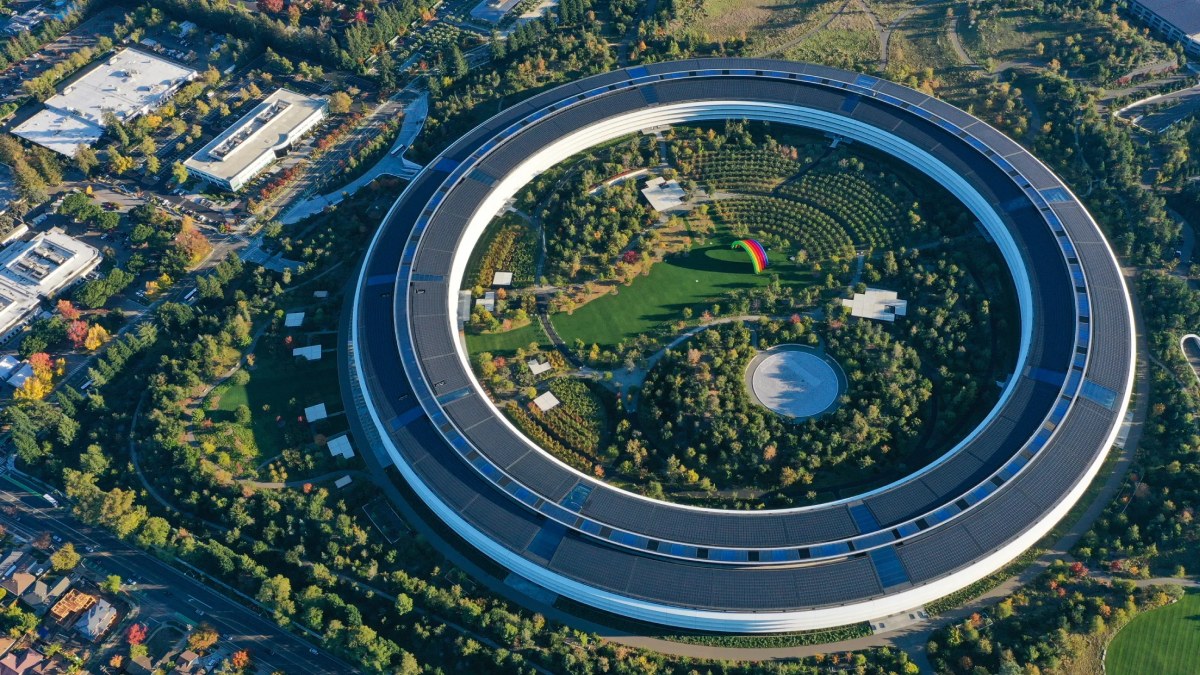
Apple filed suit Friday against OpenAI and two former employees, accusing the ChatGPT maker of building its consumer hardware effort on stolen trade secrets. The complaint, lodged in the U.S. District Court for the Northern District of California, names former senior system electrical engineer Chang Liu, former iPhone and Apple Watch design executive Tang Yew Tan, OpenAI Foundation, OpenAI Group PBC, and io Products.
The case is essentially two stories bound by a single accusation: that OpenAI systematically poached Apple talent and the proprietary knowledge those employees carried with them.

THE TWO EMPLOYEES AT THE CENTRE OF IT
Liu left Apple in January after eight years. Apple alleges he failed to return a company laptop and then, through an authentication bug, gained access to Apple's internal systems after his departure. Once inside, the company says, he downloaded dozens of confidential hardware files covering unreleased products, engineering presentations, technical specifications, and proprietary project data.
Tan's story is different in duration and scale. He spent 24 years at Apple, rising to a senior role on the iPhone and Apple Watch design team, before decamping to Opasecome as its chief hardware officer. Apple alleges Tan used confidential information from his two decades at the company to benefit his new employer.
THE TOOLS OF THE POACHING CAMPAIGN
Apple's complaint also targets OpenAI's recruitment pipeline. The company claims OpenAI's hiring process specifically requested prototypes, supplier information, and details about candidates' work on Apple hardware. It is not a subtle ask. The filing is blunt about what that means: a systematic effort to extract institutional knowledge built over years inside Cupertino.
The scale is hard to ignore. According to the filing, OpenAI's hardware division has hired more than 400 former Apple employees. Four hundred. That is not a handful of star engineers. That is a whole division staffed by people who learned their craft inside the company they are now competing with.
THE TIMING AND CONTEXT
The lawsuit arrives just after OpenAI's $6.4 billion acquisition of io Products, the hardware startup founded by former Apple design chief Jony Ive. Ive himself is not named in the complaint, but the acquisition gives OpenAI a ready-made hardware operation with deep Apple DNA. io Products was building an AI device before the deal, and now its team sits inside a company that is openly pursuing consumer hardware.
Apple says it contacted OpenAI in February with concerns about confidential information entering the company and got no response. That silence likely hardened whatever internal decision was already forming. The lawsuit followed.
SPACEXAI PRECEDENT
This is not the first time a tech giant has made this argument. In September, Elon Musk's xAI sued Op, alleging that OpenAI recruited former employees to obtain confidential source code, training methods, and dcentrenter strategies. A federal judge dismissed that lawsuit in June, finding xAI failed to show OpenAI encouraged a former employee to disclose confidential information.
Apple's case differs from xAI's in that it names specific ex-employees and describes specific acts. The allegations about Liu's laptop and authentication bug give the court concrete events to evaluate, not just broad claims about poaching.
THE PARTNERSHIP TURNED ADVERSORIAL
The lawsuit lands with extra sting because Apple and OpenAI were partners as recently as 2024. That year, Apple tapped OpenAI to bring ChatGPT to Siri as part of its Apple Intelligence initiative. The deal looked like a pragmatic embrace of the AI momentum Apple had been slow to capture. This year, Apple turned to Google's Gemini to power next-generation AI models, after delays stalled its own rollout. The OpenAI partnership was already fraying. Now it is at war.
WHAT APPLE WANTS
The complaint does not specify damages, but the goal is clearly to slow OpenAI's hardware ambitions and send a message to any current Apple employee who might be considering a jump. Silicon Valley has always run on talent raids, but the 400 number suggests something more organised than standard poaching. Apple is trying to draw a line: this is no longer just competition. It is theft.
The legal question is whether Apple can prove that Tan or Liu actually transmitted specific trade secrets, not just general expertise. The xAI indicates that judges are sceptical of these claims in the absence of concrete evidence. Apple's allegations about Liu's downloads and laptop are more specific than xAI's, but specificity is not the same as proof. Discovery will unfold over months. In the meantime, the threat alone reshapes incentives for any Apple hardware engineers considering joining OpenAI.
THE BROADER WAR FOR TALENT
The 400 number is the most revealing fact in the filing. It means OpenAI's hardware effort is overwhelmingly staffed by people who spent years inside Apple's design and engineering culture. They know how Apple thinks about materials, supply chains, thermal management, and user interfaces. That knowledge is not necessarily a trade secret in the legal sense, but it is asymmetrically valuable.
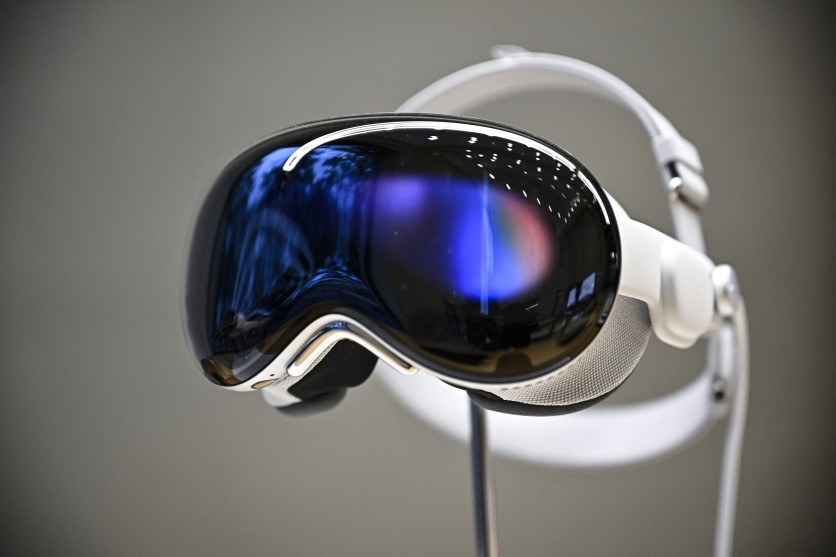
Apple's lawsuit is partly about the law and partly about deterrence. The company is betting that the threat of litigation will make OpenAI's recruiting harder and its own retention easier. Whether the case survives summary judgment is almost secondary. The signal has already been sent.
what did you make of it?
more from business
business
APPLE RECLAIMS WORLD MOST VALUABLE COMPANY TITLE, NVIDIA BOTTLES IT
apple overtook nvidia during friday trading, extending a 23% year‑to‑date surge as investors reward its ai agenda and light capital spending.
business
RYAN COHEN'S GAMESTOP PIVOT: GAMES ARE 18% OF REVENUE AND FALLING
GTA6 goes digital-only, Sony ends physical discs, and GameStop's CEO says that's fine because the company now sells toys.
business
NOTEBOOKLM NOW GEMINI NOTEBOOK, ADDS CLOUD CODE EXECUTION
The research tool originally known as Project Tailwind drops the LM and gains a secure cloud computer for data analysis.
business
TSMC FACES ITS HARDEST QUARTER YET AS AI DEMAND MEETS MARGIN SQUEEZE
Record revenue and eps gains aren't the whole story. the costs of building the world's most advanced chip factories are starting to show.