APPLE'S NEXT MAC STUDIO GETS A HEAT SINK MAKEOVER
The M5 Ultra Mac Studio arrives as early as this year, and an M7 Ultra model is pegged for 2028, all inside the current chassis.
by editor6 min readcomments soon
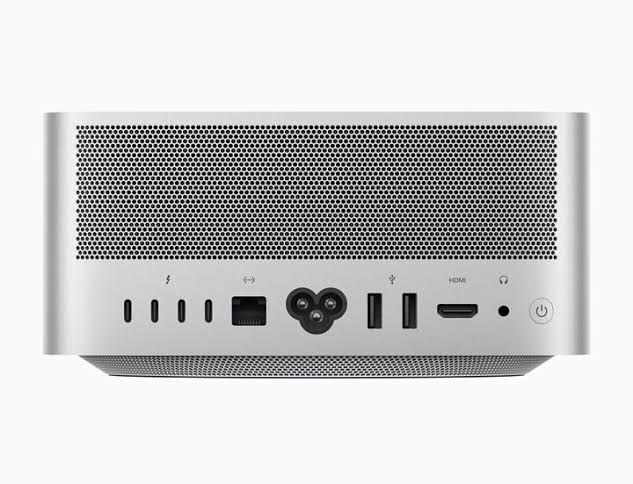
Apple is preparing an M5 Ultra-powered Mac Studio that could land as early as this year, and a separate M7 Ultra variant is already on the roadmap for 2028. The company is redesigning the heat sink to handle the additional power of its next-generation Ultra chip, but it is not changing the box you put on your desk. The current Mac Studio chassis, a compact aluminium slab that debuted in 2022, is staying put. The thinking inside Apple is that the design has held up remarkably well and there is little reason to mess with it.
THE ROADMAP
The M5 Ultra Mac Studio is the nearer of the two. It will slot into the existing lineup as the workstation for people who need serious compute but do not want a Mac Pro tower or a MacBook Pro with a fan always running. The chip itself is a dual-die part built on a more advanced process node than the M4 generation, and early benchmarks suggest a noticeable leap in both CPU and GPU performance. The Ultra series is Apple's answer to the high-end desktop processor market, competing directly with AMD Threadripper and Intel Xeon W-class parts, though Apple does not frame it that way publicly.


The M7 Ultra Mac Studio is further out, pegged for 2028, which suggests Apple plans to stay on a roughly three-year cadence for Ultra chip refreshes. That cadence is slower than the annual or biennial updates the standard M-series chips receive, but it makes sense given the target audience. Ultra machines are not bought because a new model came out. They are bought because the current one cannot finish a render or compile a codebase in a reasonable time. A longer cycle means the jump in performance is more dramatic when it does arrive, and it gives Apple's silicon team room to design a truly new architecture rather than just scaling up last year's laptop chip.
WHY THE HEATSINK REDESIGN MATTERS
The M5 Ultra is expected to draw more power and generate more heat than the M4 Ultra, which itself was already a hot chip in sustained workloads. Apple is redesigning the heatsink to better manage that thermal load. This is not a cosmetic change. The current Mac Studio uses a single large fan and a fin stack that pulls air through the bottom and exhausts it out the rear. It works well for the M1 Ultra and M2 Ultra, but those chips were built on older nodes with lower power ceilings. The M5 Ultra, built on a more refined process, could still push the thermal envelope higher if Apple decides to clock it aggressively.
A deeper or more efficient heat sink means the fan can spin slower for the same thermal performance, which keeps the machine quiet under load. Or it means Apple can run the chip at a higher sustained frequency without throttling. Either outcome benefits the user. Professional workloads such as 8K video editing, 3D rendering, software development, and on-device AI models are becoming increasingly demanding, and the margin between is shrinking. A machine that can sustain peak performance for hours without the fan ramping to jet-engine mode is a machine that working professionals will actually want to buy.
THE CHASSIS THAT REFUSED TO DIE
Apple appears happy sticking with the current Mac Studio chassis. The compact aluminium design, first introduced with the M1 Ultra model in 2022, has held up remarkably well. It is small enough to sit on a desk without dominating it, has good airflow, and accepts the same I/O layout (four Thunderbolt 4 ports on the back, two on the front for the Ultra models, plus HDMI, 10Gb Ethernet, and USB-A). The only external change Apple has made so far was swapping the front USB-C ports from Thunderbolt 3 to Thunderbolt 4 on the M2 Ultra model, a minor update that could be done silently.
Sticking with the same enclosure for three generations of chip is unusual for Apple, which typically redesigns its desktop hardware every few years. The Mac Pro got a complete overhaul in 2019 after years of dissatisfaction with the trash-can design. The Mac mini got a slimmed-down form factor in 2010 and then again in 2020. The Mac Studio, by contrast, seems to have hit a sweet spot on the first try. The aluminium unibody construction provides enough rigidity and thermal mass, and the internal layout leaves room for the power supply and the Ultra die. Redesigning it would add cost and manufacturing complexity for no clear gain in performance or usability.
THE WORKLOAD ARGUMENT
Apple's bet that professionals will buy a machine that looks identical to the one they already own relies on two things. One is that the performance gains from the new chip are large enough to justify a purchase. The other is that the cooling improvements are real enough to keep the machine quiet in real-world use. Both are plausible for the M5 Ultra, but the roadmap to 2028 makes the M7 Ultra a harder sell to early adopters. If you buy an M5 Ultra Mac Studio this year, you will be two generations behind by 2028. That is a long time in a market where software tools are constantly adding features that demand more compute.
The professional workload landscape is shifting in ways that play to Apple's strengths. On-device AI models are becoming a standard tool for developers working with large language models or image generation. These workloads are memory-bandwidth-bound, and the Ultra chip's unified memory architecture with high bandwidth can handle them better than discrete GPU setups that have to copy data across a PCIe bus. 8K video editing is no longer a niche. It is the default resolution for cinema cameras and high-end consumer drones, and editing it requires massive memory bandwidth and GPU compute. The Mac Studio is one of the few machines that can do all of this in a compact chassis without sounding like a data centre.
WHAT STAYING THE SAME MEANS
For anyone considering a Mac Studio upgrade, the news is straightforward. If you need the absolute fastest Mac desktop you can buy today, the current M2 Ultra model is still available, but it is now on the back end of its lifecycle. The M5 Ultra model, expected later this year, will be a meaningful leap in performance and thermal behaviour. If you can wait until 2028, the M7 Ultra promises an even larger leap, but the waiting is its own cost.


The lack of a redesign means you can keep your current peripherals, your current monitor setup, and your current desk layout. The upgrade is a straight swap. That convenience is underrated. Apple could have given the Mac Studio a wedge shape, a glass top, or a new colour. It chose not to. That is either wise restraint or conservative caution, depending on your view. Either way, the computer that sits on your desk and quietly processes 8K video will look the same while doing it faster and cooler than before.
what did you make of it?
more from consumer tech
consumer tech
GOOGLE ADDS YOUTUBE MUSIC, INSTACART & CANVA TO AI MODE SEARCH
Starting this week, US users can ask AI Mode to make a playlist, fill a grocery cart, or design a flyer without leaving the search…
consumer tech
ONEPLUS DEAD IN THE WEST, OPPO OVERLORDS PULL PLUG
The brand that built its reputation on has settled for leaving its biggest markets. Existing phones still work. New ones won't come.
consumer tech
GOOGLE PIXEL 10 PRO DROPS TO 699, BEST DEAL YET!
A $300 discount on the 128GB model undercuts Prime Day pricing and signals a clear runway to the pixel 11 launch.
consumer tech
APPLE RAISES APPLE ON BUNDLE FOR FAMILY AND PERMIER PLANS
the Family plan jumps $2 to $27.95 a month and the Premier to $39.95; Apple hasn’t explained the bundle increase beyond citing music licensing for…