BROWN PROFESSION CONFIRMS ALMOST AN ENTIRE CLASS CHEATED USING AI
A take-home midterm averaged 96% on 86 students. An in-person final averaged 48.6%. That is not a coincidence.
by editor5 min readcomments soon
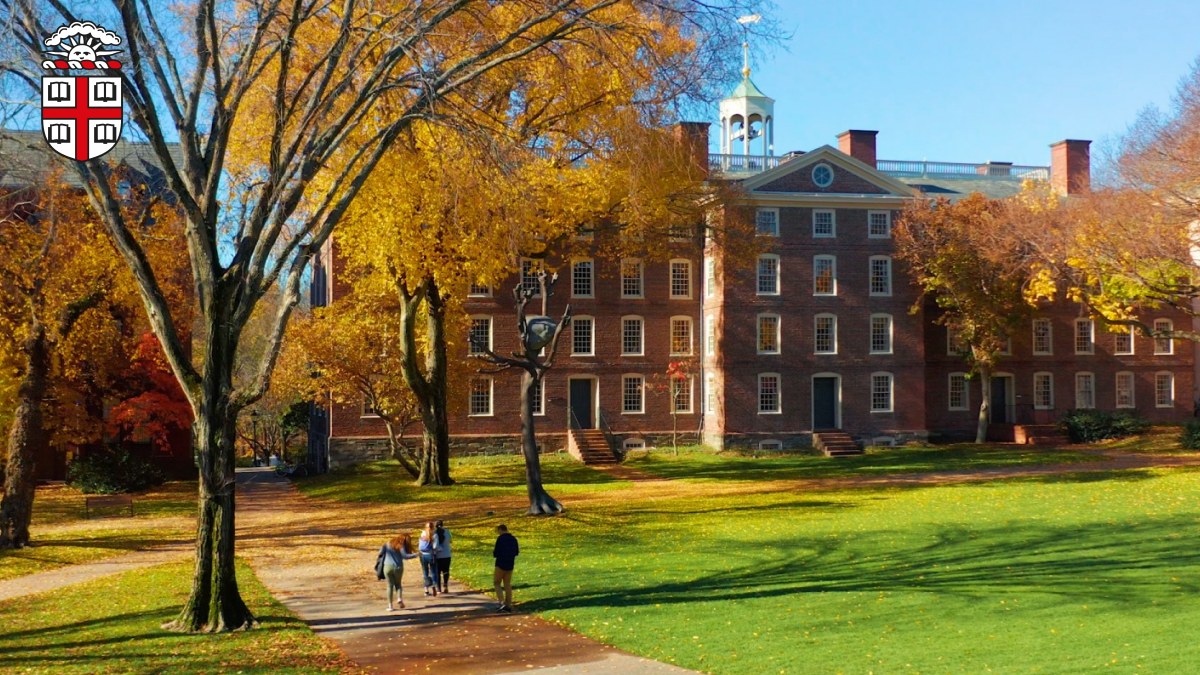
Robert Serrano, an economics professor at Brown University, suspected something was off when his welfare economics midterm scores averaged 96%. The course usually runs about 30 students, but 86 had signed up, and Serrano had a hunch that the take-home exam policy was the draw. He was right. What followed was as close to a controlled experiment on classroom AI cheating as academia has produced.
Serrano ran his own midterm through ChatGPT. The chatbot's answers looked a lot like what his students had submitted, using the same language and the same reasoning patterns. That was the first signal. The second was harder to ignore: of the 86 enrolled students, only two people scored within 10% of their midterm on the in-person final. Only one student scored higher on the final than on the midterms.



THE EXPERIMENT THAT NO ONE COULD DESIGN
The numbers tell the story better than any AI detector could. When Serrano announced that the final exam would be in person, 18 students dropped the course. Another nine simply didn't show up for the exam. That left 59 students, whose scores averaged 48.6%. Serrano said the previous average had never fallen below 65%. Three students scored 0%.
When he charted the results, most students fell more than 30 points behind their own midterm scores. The top performer on the midterm, a 95.5, scored 95 on the final, a legitimate result. Another student went from 55 to 59. The chart suggested that only two students probably took both tests without AI assistance.
Serrano had been careful not to jump to conclusions. He understood that AI-proofing tools often produce both false positives and false negatives. A study from last year showed that AI detection practice simply trains students to write against AI detectors, often by using AI. That arms race is real, and Serrano wanted evidence, not accusations. He found it, but it was ugly.
THE INSTITUTIONAL RESPONSE
Serrano submitted his data to Brown's Standing Committee on the Academic Code. He got no response. After he went public with the incident, the committee asked for individual complaints against each student and copies of their exams. Serrano suspected they would just run the exams through AI-proofers, which would miss the point. He dropped the midterm scores and made the final count for 80% of the students' final grade. He lowered the passing threshold from 50% to 40%. Brown is still investigating.
The pattern is endemic. The problem will persist as long as no one is paid to ensure student integrity, experts suggest. Universities have been slow to adapt because the problem is structural. Take-home exams exist for good reasons: accessibility, scheduling flexibility, and the reality that some students were uncomfortable taking exams in class after a gunman killed two students and injured nine others at Brown last December. But those good reasons now collide with a tool that writes a credible answer to any economics question in seconds.
WHAT THE MID-TERM ACTUALLY MEASURED
The midterm scores averaged 96%. A normal midterm range is 65% to 80%. The typical student who got a 96 on the midterm scored around 48 on the final. That is not a student who understood the material but froze under pressure. That is a student who used a tool for the take-home and did not have it in the room.
Serrano's experience is not an outlier. It is a case study. Across higher education, faculty are discovering that take-home assessments are effectively unproctored in a world where language models can produce coherent, high-scoring answers. The responses are not obviously wrong. They are obviously correct in a way that suggests the student understood the material. But the student did not.
INVESTIGATION IS STILL ON
Brown's committee is still investigating, but the practical outcome is already clear. Serrano adjusted the grading to reflect what the final revealed. The students who used AI on the midterm are not being expelled. They are being graded on what they could do in person. The honest students, two of them, are fine.
The system is not built to punish this behaviour at scale. Filing individual complaints against each student, printing their exams, running them through detectors that are known to be unreliable, that is not how you handle 84 out of 86 students. The university has to decide whether to redesign its assessment model or accept that take-home exams are, for many courses, no longer valid.
The deeper problem is that the incentives are misaligned. Students want good grades. The tool exists. The university is not funded to monitor integrity the way it monitors other risks. Until someone is paid to ensure that the exam measures the student and not the model, this will keep happening. Serrano just happened to be the one who proved it.
THE HONEST TWO!
It is worth noting that the two students who did not cheat earned something more important than an A. They earned proof that they could do the work without help. The top scorer went from 95.5 on the midterm to 95 on the final, a margin so tight it looks like a rounding error. The other went from 55 to 59, which is an honest trajectory that any instructor would recognise. Those two students will leave the course knowing exactly what they know. That is nothing.
THIS SHOULD NOT BE A CASE FOR BANNING AI
It is an argument for honesty about what a take-home exam measures in 2025. The technology is not going away. The conversation about how to assess student learning has to change. Serrano's data is the most persuasive evidence yet that waiting for that conversation to happen, while continuing to give take-home exams, produces the result he recorded.



Brown is still investigating. The committee asked for complaints. Serrano has no illusion that the process will lead to meaningful action. The problem is bigger than one course, one professor, or one committee. The problem is that the exam itself was no longer testing the student.
what did you make of it?
more from ai
ai
TSMC ADDS $100 BILLION TO ARIZONA CHIP BET, TOTAL HITS $265 BILLION
The additional investment will build at least four more 2nm fabs and advanced packaging, bringing the company's total US commitment to $265 billion.
ai
META WILL ALERT PARENTS IF TEENS DISCUSS SUICIDE WITH META AI
The opt-in feature flags self-harm references in chatbot conversations, with human review before any notification is sent.
ai
ROBLOX'S "BUILD" LETS ANYONE MAKE A GAME FROM THEIR PHONE WITH AI
The new toolset, launching July 28, turns text prompts into playable experiences and puts game creation on iPhone and iPad.
ai
ZOOX REALLS ENTURE ROBOTAXI FLEET OVER SMOKE DETECTION FAILURE
A robotaxi drove into an active fire scene obscured by smoke. NHTSA called emergency scenes not edge cases.